
DbcultAccessing Vault...
Director's Spotlight
Senior Film Conservator
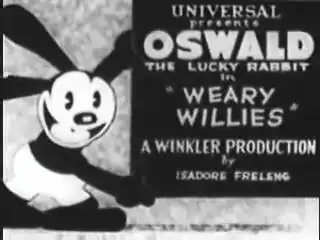
Director's Spotlight: United States
A Deep Dive into the 1929 Vision of Friz Freleng
To understand the modern evolution of United States film, one must first look at Weary Willies and the collaborative alchemy between Friz Freleng and the 1929 creative team. Subverting the expectations of the typical 1929 audience, it remains a vital reference point for anyone studying the evolution of Friz Freleng.
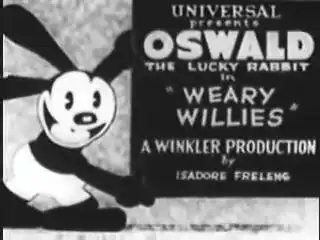
In Weary Willies, Friz Freleng pushes the boundaries of conventional narrative. The film's unique approach to its subject matter has sparked endless debates and interpretations among cinephiles and critics alike.
| Cinematography | Handheld |
| Soundtrack | Minimalist |
| Editing | Slow-Burn |
| Art Direction | Brutalist |
Visualizing the convergence of Friz Freleng's style and the core Animation narrative.
Oswald is trying the hobo life, but an encounter with a copper takes the keenness out of his freedom. Life looks promising again when he meets Brother Bear hobo [Pete] who is boiling coffee over a campfire. Oswald donates an egg to the repast-which is promptly stolen. Suddenly they see a freshly-roasted chicken in a pantry window. Oswald is made to act as purloiner. His first attempt at theft is squashed by a ferocious bulldog. Finally a neat-but-not-flashy set of long willies on a line acts as end-man, and trolleys the bird to Ozzie. Foiled again (for a policeman happens on the scene), down the unfriendly road rushes our hero. Then the policeman seizes the fowl. The bulldog, spying this, chases the officer into the far horizon, much to Oswald's glee.
Decades after its release, Weary Willies remains a vital piece of the cinematic puzzle. Its influence can be seen in countless modern works, solidifying Friz Freleng's status as a master of the craft in United States and beyond.