
DbcultAccessing Vault...
Director's Spotlight
Senior Film Conservator
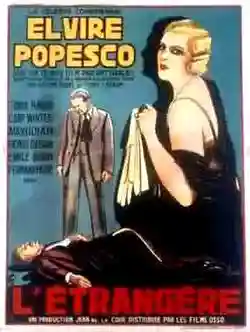
Director's Spotlight: France
A Deep Dive into the 1931 Vision of Gaston Ravel
The enduring fascination with L'étrangère is a testament to the defining moment in Drama history that Gaston Ravel helped create. This film stands as a masterclass in visual storytelling, it has cemented its place in the global cult cinema archive.
In L'étrangère, Gaston Ravel pushes the boundaries of conventional narrative. The film's unique approach to its subject matter has sparked endless debates and interpretations among cinephiles and critics alike.
The visual language of L'étrangère is defined by its use of shadows and framing, a hallmark of Gaston Ravel's style. By utilizing a 1931-era palette, the film creates an immersive experience that perfectly complements its Drama themes.
| Cinematography | Static |
| Soundtrack | Experimental |
| Editing | Elliptical |
| Art Direction | Expressionist |
Visualizing the convergence of Gaston Ravel's style and the core Drama narrative.
In a luxury hotel, a gathering of foreign high society people attend a wedding lunch. By the end of the feast a dramatic turn of events occurs : on the time of leaving the groom realizes that his newly married wife has... disappeared ! One morning, some time later, he meets her again at the Bois de Boulogne. She tells him everything about her strange attitude: she needed to be married to be able to have access to her husband's money. With this money, she managed to avenge her mother.
Decades after its release, L'étrangère remains a vital piece of the cinematic puzzle. Its influence can be seen in countless modern works, solidifying Gaston Ravel's status as a master of the craft in France and beyond.