
DbcultAccessing Vault...
Director's Spotlight
Senior Film Conservator
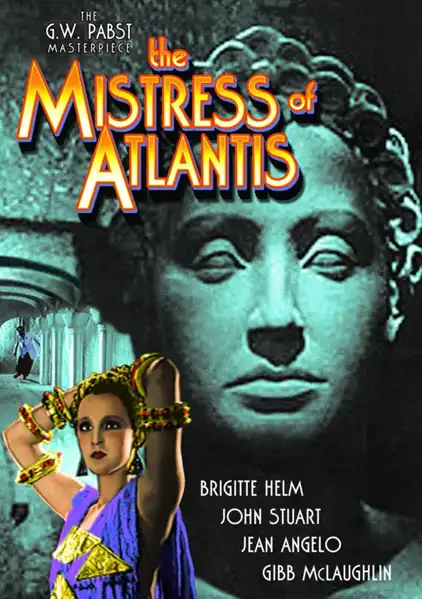
Director's Spotlight: Germany
A Deep Dive into the 1932 Vision of Georg Wilhelm Pabst
Few works in Germany cinema carry the same weight as The Mistress of Atlantis, especially regarding the technical innovation that Georg Wilhelm Pabst introduced to the Romance format. Subverting the expectations of the typical 1932 audience, it bridges the gap between traditional Romance and contemporary vision.
In The Mistress of Atlantis, Georg Wilhelm Pabst pushes the boundaries of conventional narrative. The film's unique approach to its subject matter has sparked endless debates and interpretations among cinephiles and critics alike.
To fully appreciate The Mistress of Atlantis, one must consider the cinematic climate of 1932. During this period, Germany was undergoing significant artistic shifts, and Georg Wilhelm Pabst was at the forefront of this Romance movement, often challenging established norms.
| Cinematography | Deep Focus |
| Soundtrack | Orchestral |
| Editing | Invisible |
| Art Direction | Kitsch |
Visualizing the convergence of Georg Wilhelm Pabst's style and the core Romance narrative.
Two French Foreign Legionnaires are lost amid the shifting sands of the Sahara Desert when they stumble across the entrance to an underground world. Searching this new found subterranean passage, our heroes are surprised to find the lost city of Atlantis. Ruling over this fantastic underworld realm, an evil queen sets her sights upon these strangers to her kingdom.
Decades after its release, The Mistress of Atlantis remains a vital piece of the cinematic puzzle. Its influence can be seen in countless modern works, solidifying Georg Wilhelm Pabst's status as a master of the craft in Germany and beyond.