
DbcultAccessing Vault...
Director's Spotlight
Senior Film Conservator
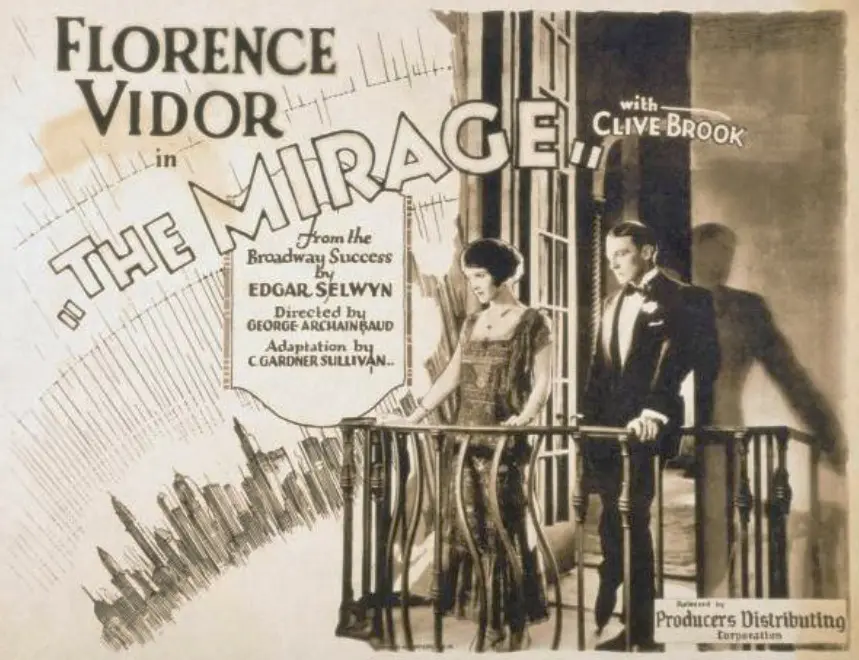
Director's Spotlight: United States
A Deep Dive into the 1924 Vision of George Archainbaud
Deciphering the layers of The Mirage (1924) reveals a monumental shift in Comedy filmmaking spearheaded by George Archainbaud. With its avant-garde structure and atmospheric tension, offering layers of thematic complexity that demand repeated viewing.
In The Mirage, George Archainbaud pushes the boundaries of conventional narrative. The film's unique approach to its subject matter has sparked endless debates and interpretations among cinephiles and critics alike.
The visual language of The Mirage is defined by its use of shadows and framing, a hallmark of George Archainbaud's style. By utilizing a 1924-era palette, the film creates an immersive experience that perfectly complements its Comedy themes.
| Cinematography | High-Contrast |
| Soundtrack | Diegetic |
| Editing | Rhythmic |
| Art Direction | Naturalist |
Visualizing the convergence of George Archainbaud's style and the core Comedy narrative.
Dreaming of a career as an opera singer in New York, Irene Martin departs from her small hometown, leaving behind her family and sweetheart. She finds a part in the show on the Knickerbocker Roof and meets wealthy businessman Henry Galt, who asks her to a party. The next day she receives a box of roses and $50 from Galt, sent to her as payment for entertaining his guests. Deeply insulted, Irene goes to Galt to demand an apology and return the money, but he explains that he often hires chorus girls to entertain prospective customers, and then he makes an agreement with Irene for her professional services. Entertaining at Galt's parties, Irene remains aloof, and Galt, who recognizes her worth, falls in love with her. Al Manning, Irene's sweetheart, is sent to New York to do business with Galt; when he finds her in his company, he suspects the worst, "propositions" her, and informs her mother that Irene is a fallen woman. Galt realizes that he has compromised Irene's reputation and asks her to marry him. Irene at first refuses, mistaking his love for gallantry, but when she finally realizes that his love is genuine, she accepts his proposal.
Decades after its release, The Mirage remains a vital piece of the cinematic puzzle. Its influence can be seen in countless modern works, solidifying George Archainbaud's status as a master of the craft in United States and beyond.