
DbcultAccessing Vault...
Director's Spotlight
Senior Film Conservator
Director's Spotlight: United States
A Deep Dive into the 1915 Vision of George B. Seitz
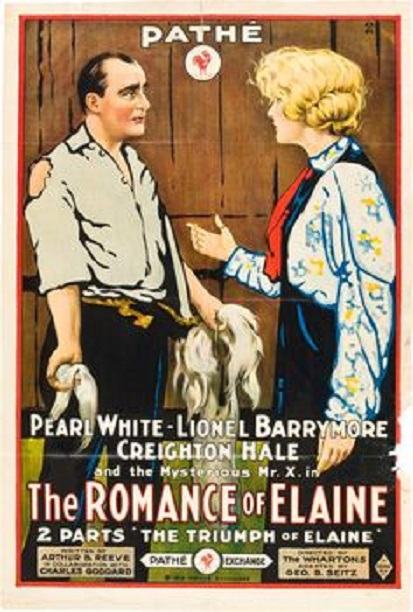
When we examine the cinematic landscape of United States, The Romance of Elaine emerges as a landmark work of the enduring legacy of George B. Seitz's artistic contribution to the genre. Through a lens of existential fatalism and cult tropes, it captures a specific kind of cinematic magic that is rarely replicated.
In The Romance of Elaine, George B. Seitz pushes the boundaries of conventional narrative. The film's unique approach to its subject matter has sparked endless debates and interpretations among cinephiles and critics alike.
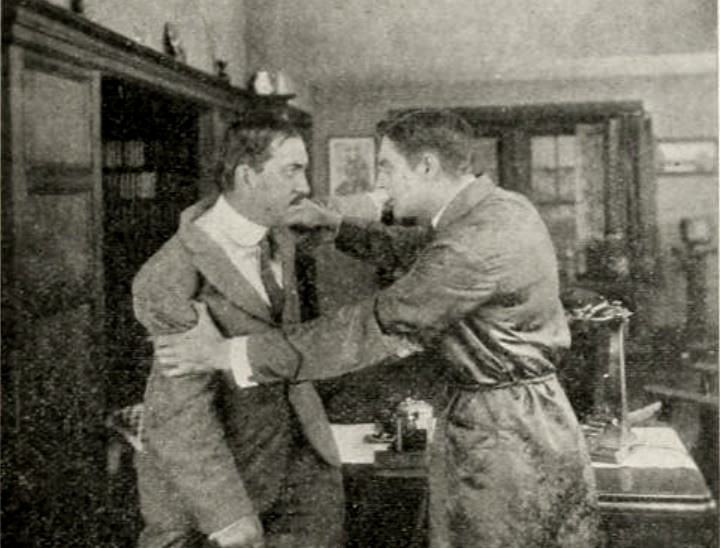
To fully appreciate The Romance of Elaine, one must consider the cinematic climate of 1915. During this period, United States was undergoing significant artistic shifts, and George B. Seitz was at the forefront of this cult movement, often challenging established norms.
| Cinematography | Noir-Inspired |
| Soundtrack | Experimental |
| Editing | Invisible |
| Art Direction | Kitsch |
Visualizing the convergence of George B. Seitz's style and the core cult narrative.
Episode 1: "The Lost Torpedo" Craig Kennedy's marvelous invention, a super-force torpedo to revolutionize warfare, has been stolen. Kennedy himself has disappeared, although Elaine has a note from him begging her not to grieve whatever happens, for he is safe. And then, one night, on a barren strip of land jutting out into the Atlantic, a fisherman, concealed behind a rock, sees the periscope of a submarine rise; sees a man's head and shoulders rise seemingly out of the sea, and sees a pair of athletic arms strike out bravely for the shore. That night, at a hotel in New York, a distinguished-looking foreigner, much resembling the man who seemed to rise up out of the sea, is shadowed by a fussy old gentleman resembling the fisherman of the coast scenes. The foreigner goes out and the fussy old gentleman goes to his room, where, after a short, sharp struggle with a valet, he searches through all drawers and papers. One paper he pockets with glee, and then departs. Elaine and Jameson are visited by the distinguished-looking foreigner who tells them he is a secret service agent from Washington, and begs to get information with regard to Kennedy and the lost torpedo. Elaine's dog, digging with its forepaws in a pot of palms, unearths the lost torpedo and carries it to the attic, where he drops it behind a trunk. The torpedo's propeller, however, has been left in the palm-pot. where Marcius Del Mar, the foreigner, finds it. Elaine is suspected by him of having concealed the torpedo. The fussy old gentleman, in Del Mar's tracks since he left his rooms, is an interested spectator. He is unaware that Del Mar has spies guarding the house, and is set upon by them. Rushing madly into the conservatory, he faces Del Mar. Both draw their guns, but the fussy old gentleman fires first. His gun is loaded with bullets containing an overpowering gas. Both Del Mar and Elaine fall suffocated to the floor. How the fussy old gentleman escapes is a fitting climax to this episode.
Decades after its release, The Romance of Elaine remains a vital piece of the cinematic puzzle. Its influence can be seen in countless modern works, solidifying George B. Seitz's status as a master of the craft in United States and beyond.