
DbcultAccessing Vault...
Director's Spotlight
Senior Film Conservator
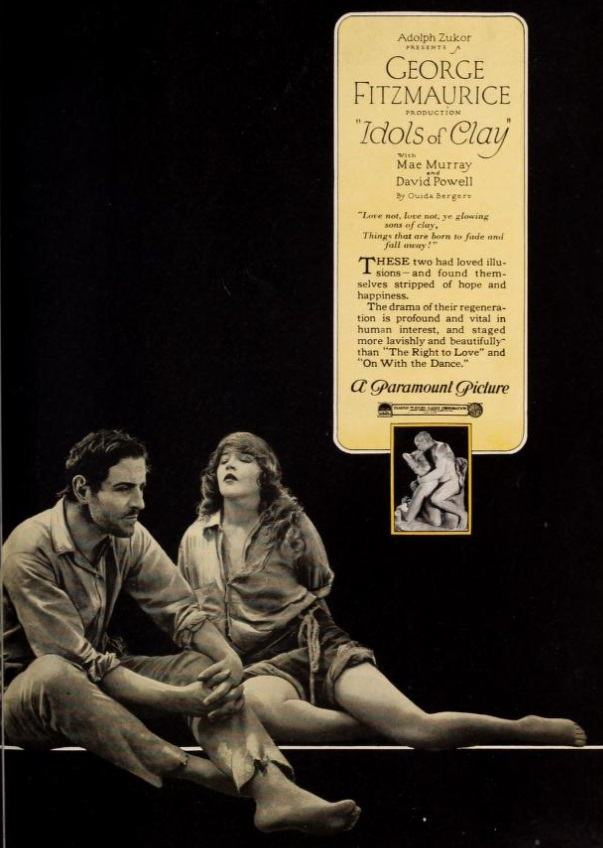
Director's Spotlight: United States
A Deep Dive into the 1920 Vision of George Fitzmaurice
The 1920 release of Idols of Clay marked a significant moment for the stylistic boundaries pushed by George Fitzmaurice during the production. In the context of United States's rich cinematic history, it invites us to question our own perceptions of Drama narratives.
In Idols of Clay, George Fitzmaurice pushes the boundaries of conventional narrative. The film's unique approach to its subject matter has sparked endless debates and interpretations among cinephiles and critics alike.
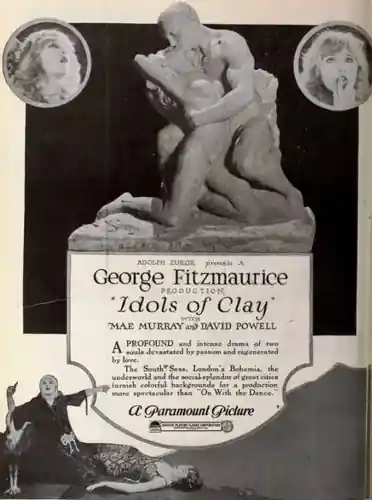
In this work, George Fitzmaurice explores the intersection of Drama and United States cultural identity. The meticulous attention to detail suggests a deep-seated commitment to pushing the boundaries of the medium, ensuring that Idols of Clay remains a relevant topic of study for Drama enthusiasts.
| Cinematography | High-Contrast |
| Soundtrack | Experimental |
| Editing | Elliptical |
| Art Direction | Expressionist |
Visualizing the convergence of George Fitzmaurice's style and the core Drama narrative.
Faith Merrill lives in the South Seas where she has been reared by her father Jim, a pearl-smuggling recluse who has kept his daughter completely innocent of the ways of the world. One day Faith finds Dion Holme, a sculptor who left England after a devastating love affair with Lady Cray, adrift on the beach, and brings him home. Under Faith's influence, Dion is regenerated; he begins sculpting again and returns to England, unaware of the girl's love for him. Upon her father's death, Faith follows Dion to London where he has become a famous sculptor. Lady Cray, jealous of Faith's youth and beauty, conceives a plan to destroy the girl by introducing her to a life of dissipation and drug use. Lady Cray's scheme works when at a banquet, Faith performs a risqué drug-induced dance that repulses Dion. After Lady Cray commits suicide, Faith, fearful that she will be suspected of murder, flees to the Limehouse District where she takes refuge in an opium den. Meanwhile, Dion, discovering that he loves the girl, rescues her, and they return together to the paradise of the South Seas.
Decades after its release, Idols of Clay remains a vital piece of the cinematic puzzle. Its influence can be seen in countless modern works, solidifying George Fitzmaurice's status as a master of the craft in United States and beyond.