
DbcultAccessing Vault...
Director's Spotlight
Senior Film Conservator
Director's Spotlight: United States
A Deep Dive into the 1918 Vision of George Fitzmaurice
Deciphering the layers of The Hillcrest Mystery (1918) reveals the complex thematic architecture established by George Fitzmaurice. Utilizing a 1918-specific aesthetic that remains timeless, it stands as the definitive 1918 statement on cult identity.
In The Hillcrest Mystery, George Fitzmaurice pushes the boundaries of conventional narrative. The film's unique approach to its subject matter has sparked endless debates and interpretations among cinephiles and critics alike.
In this work, George Fitzmaurice explores the intersection of cult and United States cultural identity. The meticulous attention to detail suggests a deep-seated commitment to pushing the boundaries of the medium, ensuring that The Hillcrest Mystery remains a relevant topic of study for cult enthusiasts.
| Cinematography | Noir-Inspired |
| Soundtrack | Diegetic |
| Editing | Elliptical |
| Art Direction | Expressionist |
Visualizing the convergence of George Fitzmaurice's style and the core cult narrative.
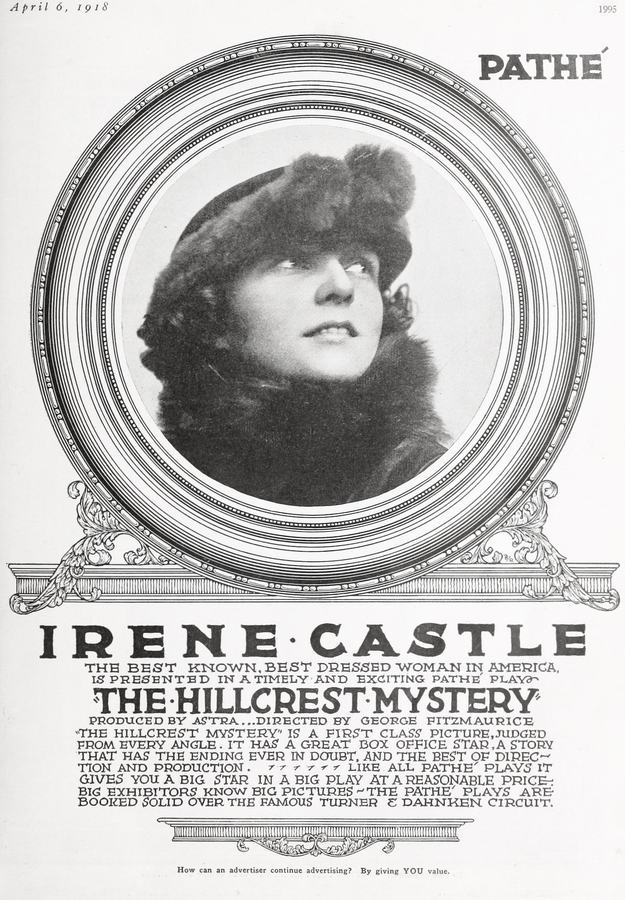
Mrs. Castle appears as Marion Sterling, daughter of a big shipbuilder. Her father has just determined to turn his great plant over to the Government, when he is suddenly murdered. Marion is beloved by Hugo Smith, her father's partner, but she, herself, loves the young secretary, Gordon Brett. The tragic death of Mr. Sterling is brought about by choking, two arms appearing from behind the open front door during a rain storm. A detective named Barney Moffat is called in, and goes at once to work upon the case. His methods are unusual, and very effective. Gordon Brett is suspected of being the murderer, but the truth is brought out later in a dramatic way.
Decades after its release, The Hillcrest Mystery remains a vital piece of the cinematic puzzle. Its influence can be seen in countless modern works, solidifying George Fitzmaurice's status as a master of the craft in United States and beyond.