
DbcultAccessing Vault...
Director's Spotlight
Senior Film Conservator
Director's Spotlight: United States
A Deep Dive into the 1915 Vision of George Fitzmaurice
Exploring the cult underpinnings of Who's Who in Society leads us to the stylistic boundaries pushed by George Fitzmaurice during the production. Through a lens of existential fatalism and cult tropes, it continues to spark endless debates among critics and cinephiles alike.
In Who's Who in Society, George Fitzmaurice pushes the boundaries of conventional narrative. The film's unique approach to its subject matter has sparked endless debates and interpretations among cinephiles and critics alike.
The visual language of Who's Who in Society is defined by its use of shadows and framing, a hallmark of George Fitzmaurice's style. By utilizing a 1915-era palette, the film creates an immersive experience that perfectly complements its cult themes.
| Cinematography | Static |
| Soundtrack | Minimalist |
| Editing | Disjunctive |
| Art Direction | Baroque |
Visualizing the convergence of George Fitzmaurice's style and the core cult narrative.
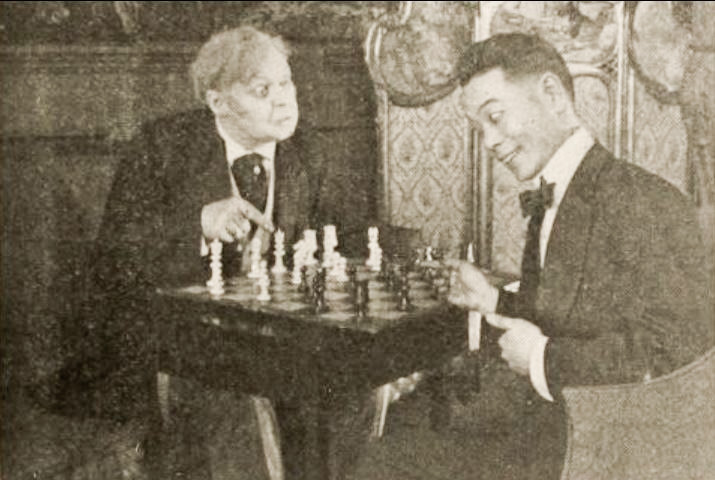
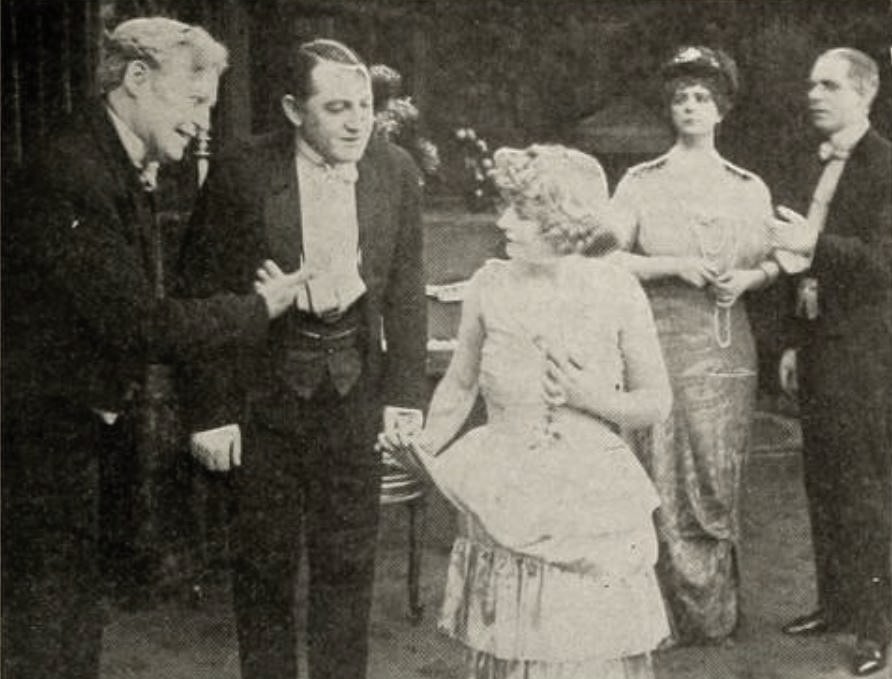
Mrs. O'Brien, newly rich, vainly aspires to social prominence, an ambition in which her common, chess-loving husband does not sympathize. Pretty Mary Ellen, the daughter, and a Japanese butler constitute the household. One day Mrs. O'Brien sends out invitations to a party which the Van Dusens and Van Astorbilts refuse to attend. While she is mourning this loss, an automobile breaks down in front of the house, and a slender young man who introduces himself as Lord Algernon Ste. Clair seeks refuge, while his car awaits the repairman. Mrs. O'Brien, scenting a noble match, promptly invites him to stay for the party. Meanwhile a rough-looking character alights from an automobile, and after a careful inspection of the house, rejoins his friends and disappears. An hour later, immaculately groomed, he enters the club of which O'Brien is a member, and finding the solitary old Irishman playing a lonesome game of chess, offers himself for partner. In this way he obtains an invitation to attend Mary Ellen's party, in due time the guests arrive, consisting of the good-hearted but illiterate Flanagans, their two children and the stranger. There immediately commences a vigorous suit for the hand of pretty Mary Ellen on the part of Lord Algy and the stranger. Mary Ellen shows her preference for the stranger. That night weird things happen. The stranger who has been invited to spend the night, slips into the library in time to see O'Brien much excited over the appearance of a white hand that has deftly poked through the portieres in search of the electric switch. In another instant the stranger throws O'Brien to the floor, and Lord Algy in hand, stands over them. There is a scuffle and the stranger disappears, gun in hand, through the French window. An hour later Lord Algy, in his room, cautiously draws a string of pearls from his pocket, only to turn and face the gun of the stranger, who raises his head from back of Lord Algy's bed. There follows explanations and the stranger shows his badge as a government secret service agent, long in search of the crook known as Lord Algy. O'Brien rejoices and Mary Ellen slips her hand into that of the "stranger's," while Mrs. O'Brien, thoroughly disgusted, hurls a volume of "Who's Who in Society" into the waste basket.
Decades after its release, Who's Who in Society remains a vital piece of the cinematic puzzle. Its influence can be seen in countless modern works, solidifying George Fitzmaurice's status as a master of the craft in United States and beyond.