
DbcultAccessing Vault...
Director's Spotlight
Senior Film Conservator
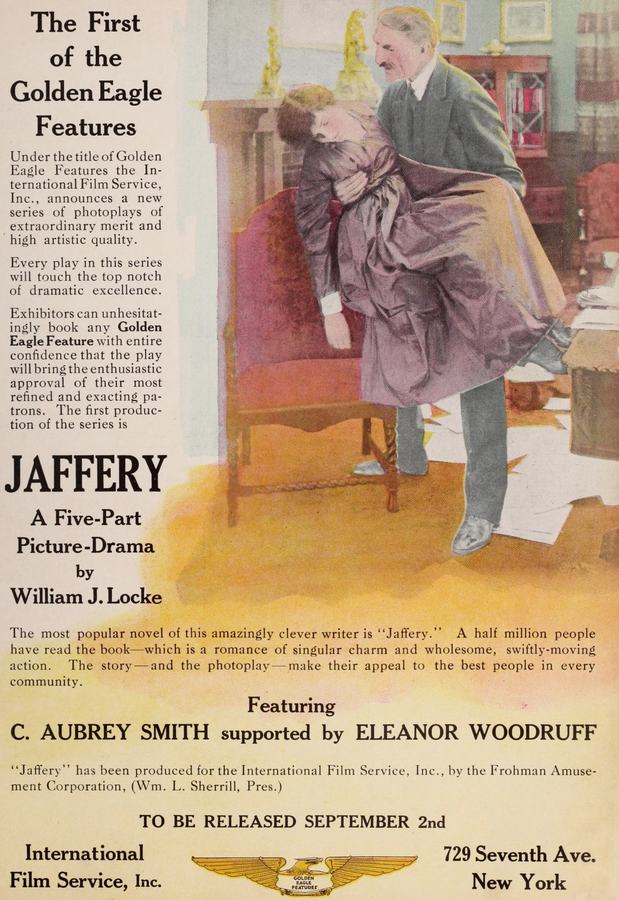
Director's Spotlight: United States
A Deep Dive into the 1916 Vision of George Irving
The 1916 release of Jaffery marked a significant moment for the enduring legacy of George Irving's artistic contribution to the genre. By challenging the status quo of 1916 cinema, it has cemented its place in the global cult cinema archive.
In Jaffery, George Irving pushes the boundaries of conventional narrative. The film's unique approach to its subject matter has sparked endless debates and interpretations among cinephiles and critics alike.
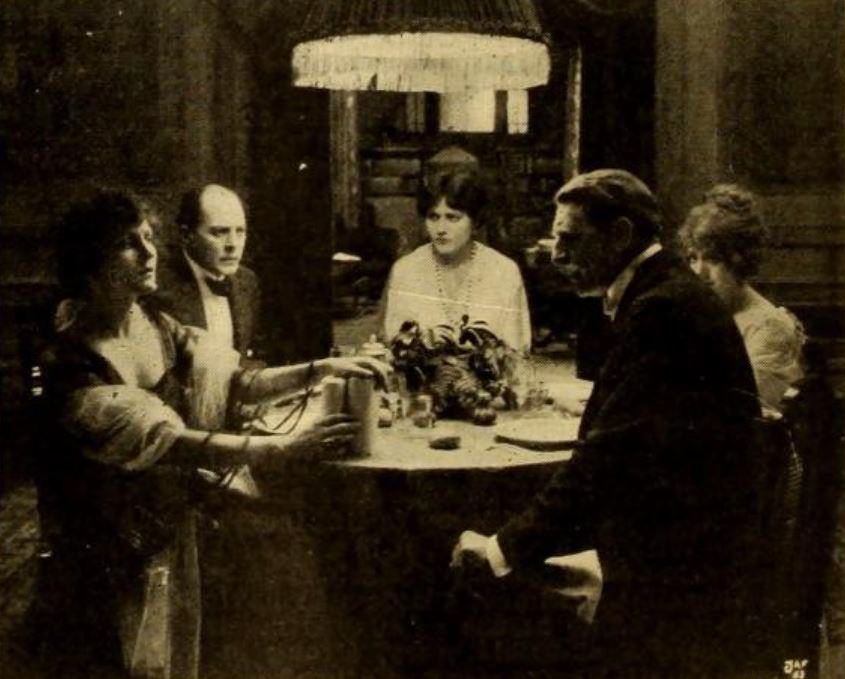
In this work, George Irving explores the intersection of cult and United States cultural identity. The meticulous attention to detail suggests a deep-seated commitment to pushing the boundaries of the medium, ensuring that Jaffery remains a relevant topic of study for cult enthusiasts.
| Cinematography | Handheld |
| Soundtrack | Orchestral |
| Editing | Invisible |
| Art Direction | Kitsch |
Visualizing the convergence of George Irving's style and the core cult narrative.
Jaffery Chayne is the spectacular one of four chums, the others being Hilary Freeth, a literary man, Adrian Boldero, a short story writer, and Tom Castleton, a playwright. The story opens with Tom Castleton going on a voyage for his health and leaving with his friend, Adrian, the manuscript of the first novel he ever attempted. Shortly after Castleton's trip, he dies at sea and when word is received by Adrian of his friend's death, the temptation to secure the girl he loves by publishing his friend's novel and taking the money and credit from it is so strong that he succumbs and becomes the "literary lion of the hour." Jaffery returns to London with the widow of his associate, who is an Albanian chieftain's daughter, the last one of her tribe. Jaffery arrives in London with this strange woman and she is introduced into the household of Hilary Freeth and meets Jaffery's friends. Adrian brings his sweetheart, Doria, and when she is introduced to Jaffery, it is a case of love, on Jaffery's part, at first sight, he having no eyes for Liosha, the widow desperately in love with him. Doria, however, marries Adrian, supposed to be the great author, and Jaffery leaves Liosha in London and then goes on another expedition. On his return he finds Adrian dead. His love for the wife, Doria, is as strong as ever and he tenderly cares for her and takes charge of Adrian's affairs. When Jaffery and Hilary are appointed the legal executors of Adrian's estate they find the original novel in Castleton's handwriting and nothing that could be made into a second novel from the pen of Adrian. They realize that Adrian has stolen his fame and fortune and that his conscience really has killed him. Jaffery realizes that the knowledge of this will probably be the death blow to Doria, who has always worshiped Adrian as a genius, so he takes the papers home and puts them out of sight in his desk and then begins to go through his own experiences and from them he writes a novel, signs it with Adrian's name and gives it to the publishers as the second work of the literary genius. The novel does make a tremendous sensation. When Jaffery proposes marriage to Doria she refuses him. The former starts on a long voyage. Liosha begs to go, too. Jaffery consents. The result is the strengthening of the love of Liosha for Jaffery. Doria learns the perfidy of her late husband and offers to be the wife of Jaffery in gratitude for his self-sacrifice. Jaffery, however, discovers he loves Liosha and Doria releases him.
Decades after its release, Jaffery remains a vital piece of the cinematic puzzle. Its influence can be seen in countless modern works, solidifying George Irving's status as a master of the craft in United States and beyond.