
DbcultAccessing Vault...
Director's Spotlight
Senior Film Conservator
Director's Spotlight: United States
A Deep Dive into the 1916 Vision of George Irving
When we examine the cinematic landscape of United States, The Ballet Girl emerges as a landmark work of the enduring legacy of George Irving's artistic contribution to the genre. Through a lens of existential fatalism and cult tropes, it captures a specific kind of cinematic magic that is rarely replicated.
In The Ballet Girl, George Irving pushes the boundaries of conventional narrative. The film's unique approach to its subject matter has sparked endless debates and interpretations among cinephiles and critics alike.

To fully appreciate The Ballet Girl, one must consider the cinematic climate of 1916. During this period, United States was undergoing significant artistic shifts, and George Irving was at the forefront of this cult movement, often challenging established norms.
| Cinematography | Static |
| Soundtrack | Orchestral |
| Editing | Invisible |
| Art Direction | Kitsch |
Visualizing the convergence of George Irving's style and the core cult narrative.
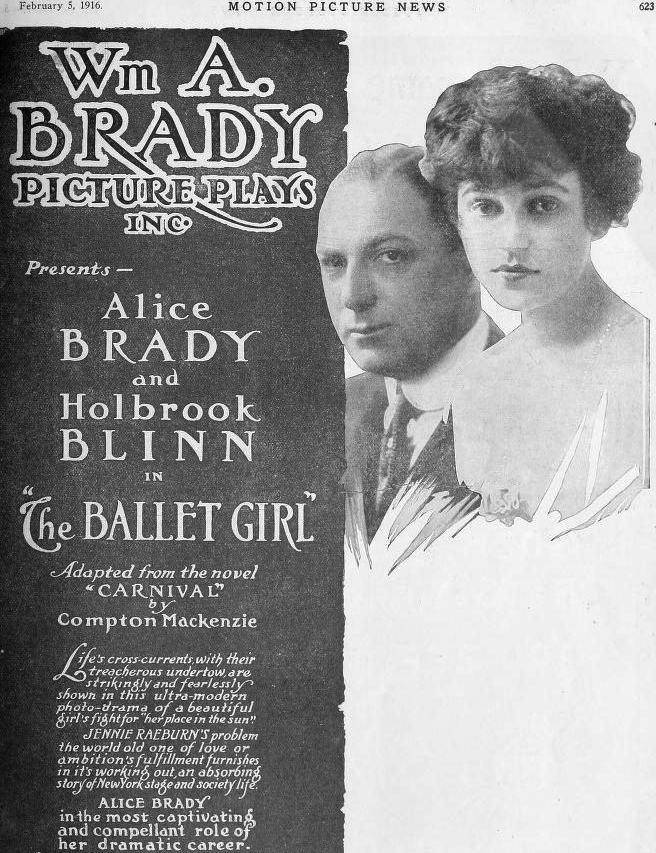
Aerial dancer La Syrena, whose jealous husband kills her while she performs in midair. Her daughter, Jennie Raeburn, soon orphaned, grows up unaware of her mother's occupation, but nonetheless feels the urge to dance. She makes a successful stage debut and gets caught up in the social world of the theater. A cousin from the country, Zachary Trewehella, who has always loved Jennie, disapproves of her sudden obsession with wealth and status, but Jennie ignores his warnings. As a result, she has a disastrous affair with a society man, and realizes that her cousin was correct. In the end, bitter over her last affair, she reluctantly marries Zachary, but soon falls in love with him.
Decades after its release, The Ballet Girl remains a vital piece of the cinematic puzzle. Its influence can be seen in countless modern works, solidifying George Irving's status as a master of the craft in United States and beyond.