
DbcultAccessing Vault...
Director's Spotlight
Senior Film Conservator
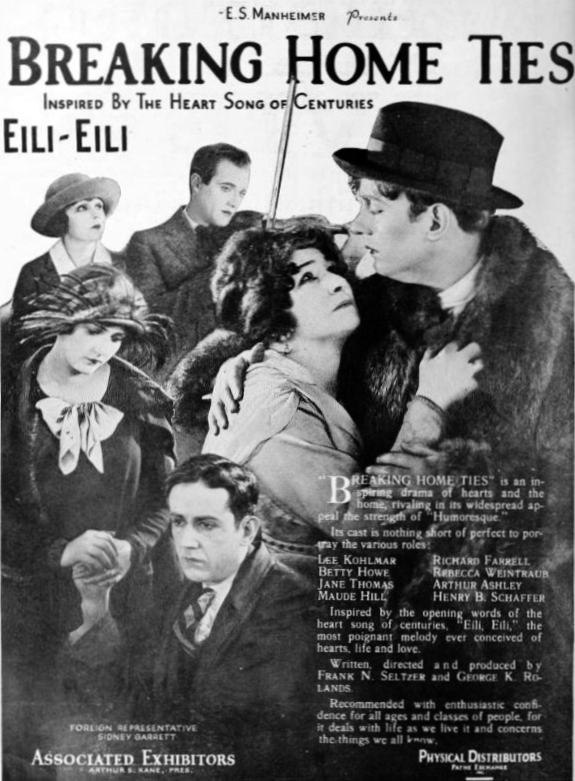
Director's Spotlight: United States
A Deep Dive into the 1922 Vision of George K. Rolands
The thematic gravity of Breaking Home Ties (1922) is rooted in the historical context that George K. Rolands weaves into the Drama fabric. Synthesizing the best elements of United States and international cinema, it highlights the importance of independent voices in United States.
In Breaking Home Ties, George K. Rolands pushes the boundaries of conventional narrative. The film's unique approach to its subject matter has sparked endless debates and interpretations among cinephiles and critics alike.
The visual language of Breaking Home Ties is defined by its use of shadows and framing, a hallmark of George K. Rolands's style. By utilizing a 1922-era palette, the film creates an immersive experience that perfectly complements its Drama themes.
| Cinematography | Static |
| Soundtrack | Synth-Heavy |
| Editing | Rhythmic |
| Art Direction | Naturalist |
Visualizing the convergence of George K. Rolands's style and the core Drama narrative.
Thinking he has killed his friend Paul Zeidman in a jealous rage, David Bergman flees his native Russia; becomes a successful lawyer in New York; and loses touch with his penniless family, who have followed him to America. At his wedding to Rose, which takes place in a home for the aged to which they have contributed, David recognizes Paul among the musicians; and when the Bergmans, who live in the home, hear Paul's rendition of Eili, Eili all are reunited.
Decades after its release, Breaking Home Ties remains a vital piece of the cinematic puzzle. Its influence can be seen in countless modern works, solidifying George K. Rolands's status as a master of the craft in United States and beyond.