
DbcultAccessing Vault...
Director's Spotlight
Senior Film Conservator
Director's Spotlight: United States
A Deep Dive into the 1919 Vision of George L. Cox
The evocative power of The Hellion stems from the unique collaboration between the bold experimentation that has become synonymous with George L. Cox. Framed by the hauntingly beautiful landscapes of the production, it echoes the profound changes occurring in United States during that era.
In The Hellion, George L. Cox pushes the boundaries of conventional narrative. The film's unique approach to its subject matter has sparked endless debates and interpretations among cinephiles and critics alike.
While deeply rooted in United States, The Hellion has achieved a global reach, influencing directors from various backgrounds. Its ability to translate cult tropes into a universal cinematic language is why it remains a cult staple decades after its 1919 release.
| Cinematography | Deep Focus |
| Soundtrack | Minimalist |
| Editing | Slow-Burn |
| Art Direction | Brutalist |
Visualizing the convergence of George L. Cox's style and the core cult narrative.
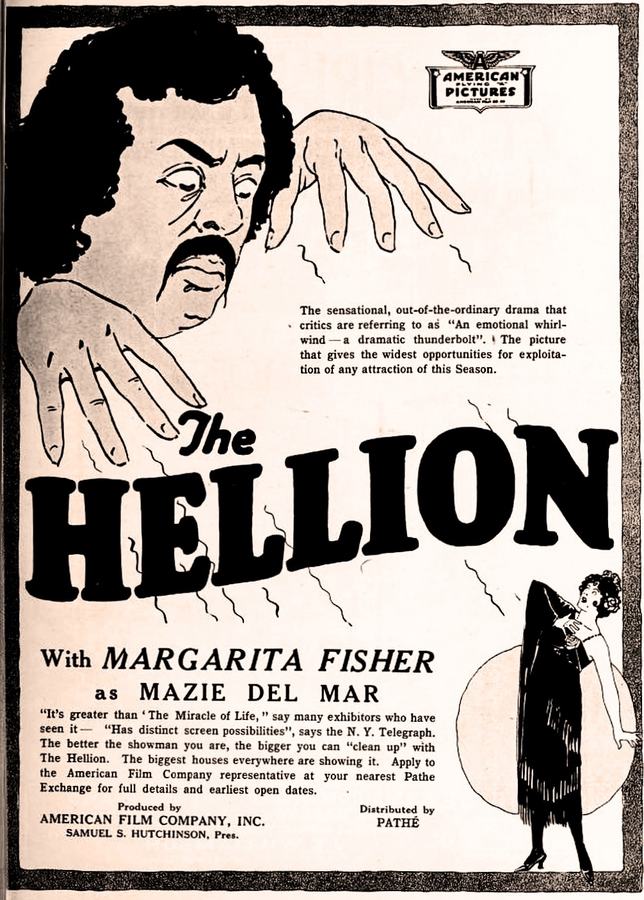
Joseph and Helen Harper, who have spent their niece Blanche's inheritance, worry that Blanche's fiancé, wealthy George Graham, will no longer want her when he finds out that she has gone insane from grief after hearing a report of his death in the war. When George returns and learns of the situation, he hires detectives to investigate. The Harpers convince cabaret dancer Mazie Del Mar, who resembles Blanche, to impersonate her and marry George. Mazie, wanting to escape from cabaret owner Signor Enrico, called "The Hellion," who uses hypnosis to control her, agrees, but she falls in love with George and feels deceitful. After Enrico kidnaps Blanche, thinking she is Mazie, and unsuccessfully tries to hypnotize her, they fight and Blanche is killed. George tells Mazie, about to confess, that his detectives told him who she was, but that he loves her anyway. He forgives the Harpers, since their scheme resulted in love for him and Mazie.
Decades after its release, The Hellion remains a vital piece of the cinematic puzzle. Its influence can be seen in countless modern works, solidifying George L. Cox's status as a master of the craft in United States and beyond.