
DbcultAccessing Vault...
Director's Spotlight
Senior Film Conservator
Director's Spotlight: United States
A Deep Dive into the 1935 Vision of George Marshall
Exploring the Comedy underpinnings of $10 Raise leads us to the stylistic boundaries pushed by George Marshall during the production. Through a lens of existential fatalism and Comedy tropes, it continues to spark endless debates among critics and cinephiles alike.
In $10 Raise, George Marshall pushes the boundaries of conventional narrative. The film's unique approach to its subject matter has sparked endless debates and interpretations among cinephiles and critics alike.
While deeply rooted in United States, $10 Raise has achieved a global reach, influencing directors from various backgrounds. Its ability to translate Comedy tropes into a universal cinematic language is why it remains a cult staple decades after its 1935 release.
| Cinematography | Deep Focus |
| Soundtrack | Diegetic |
| Editing | Elliptical |
| Art Direction | Expressionist |
Visualizing the convergence of George Marshall's style and the core Comedy narrative.
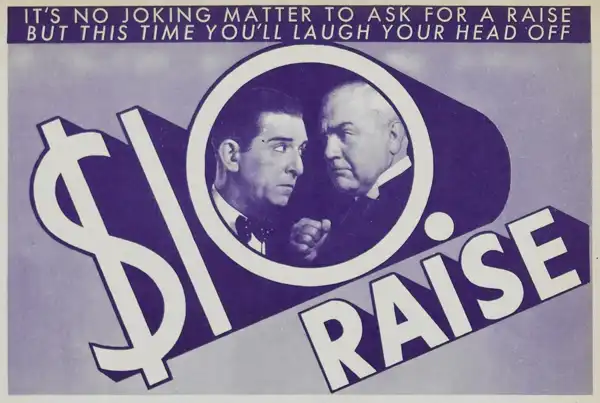
Hubert T. Wilkins is a timid, underpaid bookkeeper who, after long years of timidity, gets the courage from his sweetheart, Emily Converse, to ask his boss, gruff-and-mean Mr. Bates, for a $10 dollar raise. And gets fired. He and Emily want to get married, but not before Hubert has more money coming in. He invests his savings in a land deal but finds that the property he bought is a swamp. But calamity turns to joy when when valuable mineral properties are found there, and he becomes rich enough to buy a controlling interest in his former employer's company. But, instead of firing Bates, he rewards him with an executive position, and he and Emily depart on a honeymoon.
Decades after its release, $10 Raise remains a vital piece of the cinematic puzzle. Its influence can be seen in countless modern works, solidifying George Marshall's status as a master of the craft in United States and beyond.