
DbcultAccessing Vault...
Director's Spotlight
Senior Film Conservator
Director's Spotlight: United States
A Deep Dive into the 1921 Vision of George Randolph Chester
To understand the modern evolution of United States film, one must first look at The Son of Wallingford and the meticulous attention to detail that George Randolph Chester applied to every frame. Reflecting the political and social shifts of the 1921s, it showcases the power of Crime as a tool for social commentary.
In The Son of Wallingford, George Randolph Chester pushes the boundaries of conventional narrative. The film's unique approach to its subject matter has sparked endless debates and interpretations among cinephiles and critics alike.
In this work, George Randolph Chester explores the intersection of Crime and United States cultural identity. The meticulous attention to detail suggests a deep-seated commitment to pushing the boundaries of the medium, ensuring that The Son of Wallingford remains a relevant topic of study for Crime enthusiasts.
| Cinematography | Deep Focus |
| Soundtrack | Minimalist |
| Editing | Slow-Burn |
| Art Direction | Brutalist |
Visualizing the convergence of George Randolph Chester's style and the core Crime narrative.
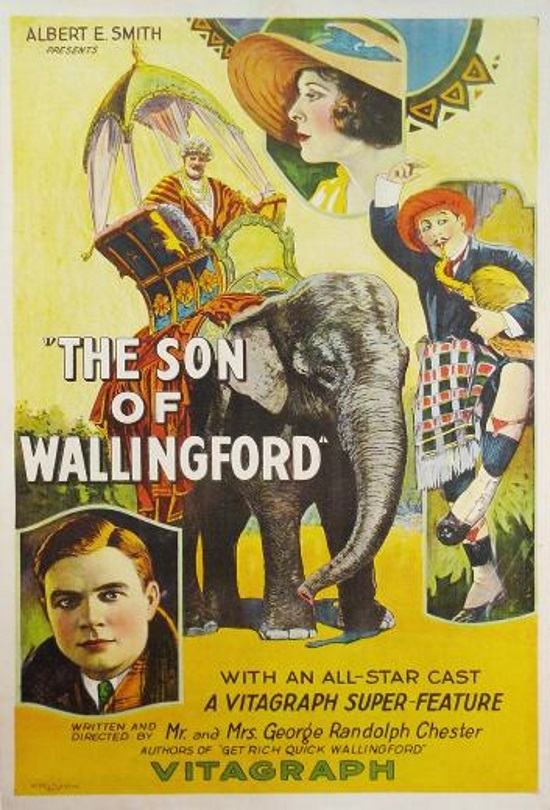
Jimmy Wallingford leaves home with his adopted brother, "Toad," after his parents, J. Rufus and Fannie Wallingford, become convinced that he has inherited their criminal tendencies. In a distant village, Toad finds evidence of an oil well on the Curtis farm, the home of Jimmy's new girl friend, Mary. After their investment proves to be fruitless, J. Rufus arrives in town disguised as an East Indian and makes promises of great prosperity to the villagers. He and his accomplice, Blackie Daw, purchase a plot of land from Henry Beegoode, "strike" oil (pumped from tank cars), and sell stock in their enterprise. However, Henry denies having sold the land to J. Rufus, and claims that there is no bill of sale. During an oil fire that nearly traps Jimmy and his friends, the elder Wallingford admits that the well is a ploy to expose Henry, a swindler who has sold the same property several times over. J. Rufus obtains an authentic bill of sale, after which Jimmy strikes oil on the land.
Decades after its release, The Son of Wallingford remains a vital piece of the cinematic puzzle. Its influence can be seen in countless modern works, solidifying George Randolph Chester's status as a master of the craft in United States and beyond.