
DbcultAccessing Vault...
Director's Spotlight
Senior Film Conservator
Director's Spotlight: United States
A Deep Dive into the 1918 Vision of George Ridgwell
Few works in United States cinema carry the same weight as The Song and the Sergeant, especially regarding the cultural zeitgeist captured so perfectly by George Ridgwell in 1918. Utilizing a 1918-specific aesthetic that remains timeless, it serves as a blueprint for future generations of cult directors.
In The Song and the Sergeant, George Ridgwell pushes the boundaries of conventional narrative. The film's unique approach to its subject matter has sparked endless debates and interpretations among cinephiles and critics alike.
To fully appreciate The Song and the Sergeant, one must consider the cinematic climate of 1918. During this period, United States was undergoing significant artistic shifts, and George Ridgwell was at the forefront of this cult movement, often challenging established norms.
| Cinematography | Handheld |
| Soundtrack | Synth-Heavy |
| Editing | Rhythmic |
| Art Direction | Naturalist |
Visualizing the convergence of George Ridgwell's style and the core cult narrative.
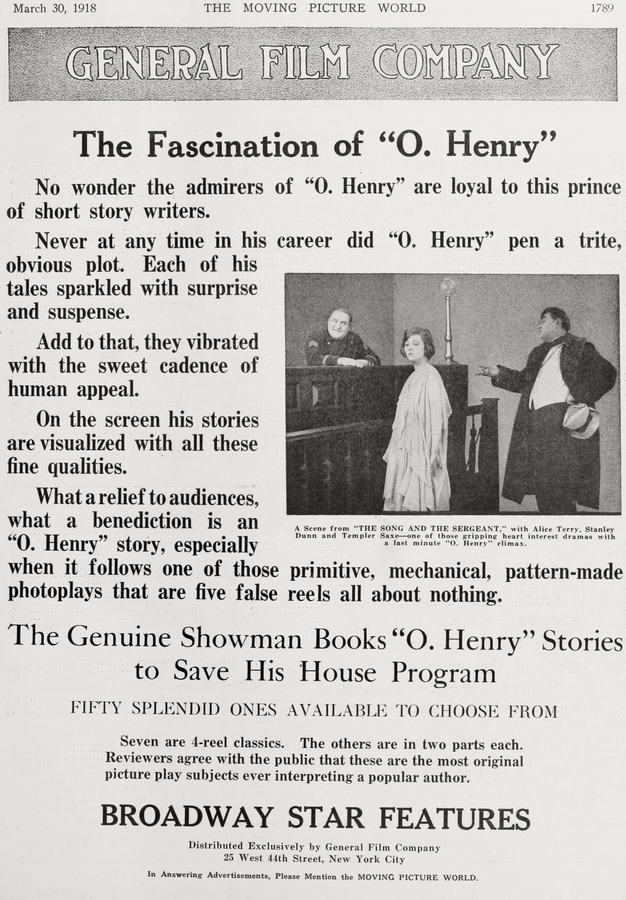
A vaudeville act which falls flat after starting off with great promise furnishes the theme for this two-reel O. Henry story. No one is able to ascertain the cause, and after the cast creates so much disturbance in a restaurant that they are arrested and taken before the police sergeant do his judicious questions enable the police matron to fathom the mystery; that is, that the situation where the star always breaks down and weeps is because the leading man is in love with her and trying to show it in his singing.
Decades after its release, The Song and the Sergeant remains a vital piece of the cinematic puzzle. Its influence can be seen in countless modern works, solidifying George Ridgwell's status as a master of the craft in United States and beyond.