
DbcultAccessing Vault...
Director's Spotlight
Senior Film Conservator
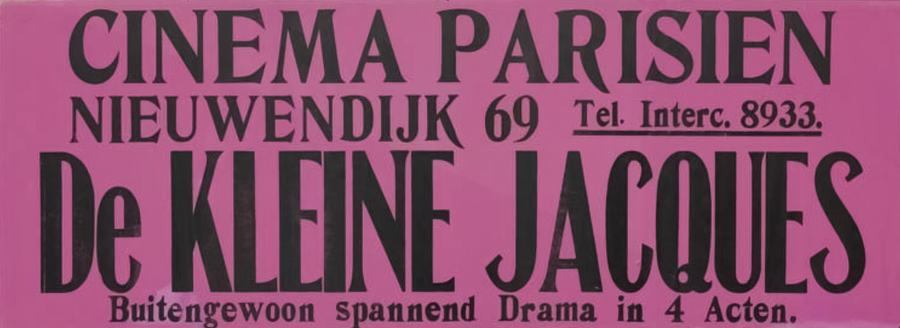
Director's Spotlight: France
A Deep Dive into the 1912 Vision of Georges Monca
Witnessing the stylistic transformation of cult through Little Jack reveals the provocative questions that Georges Monca poses to the France audience. Exploring the nuances of the human condition with cult flair, it showcases the power of cult as a tool for social commentary.
In Little Jack, Georges Monca pushes the boundaries of conventional narrative. The film's unique approach to its subject matter has sparked endless debates and interpretations among cinephiles and critics alike.
To fully appreciate Little Jack, one must consider the cinematic climate of 1912. During this period, France was undergoing significant artistic shifts, and Georges Monca was at the forefront of this cult movement, often challenging established norms.
| Cinematography | Noir-Inspired |
| Soundtrack | Diegetic |
| Editing | Rhythmic |
| Art Direction | Naturalist |
Visualizing the convergence of Georges Monca's style and the core cult narrative.
Noel Bambert, an honest workman, finds that his wife has been unfaithful to him and that her guilty associate is his best friend. Broken-hearted, he drives his wife from his house and all his love and care is now lavished on Little Jack, his son, a delicate and sensitive child. Losing interest in his work because of his domestic trouble he becomes careless and seriously injures his hand in a vise. Rendered incapable of work for a time he is reduced to the extremes of poverty. That Little Jack may have food, the father begs on the street, and one night through an open window sees murder being committed. He rushes over to prevent the tragedy, but arrives too late. The assassin has fled amid servants running into the room find Rambert only and seize him as the murderer and turn him over to the police. The real murderer. Mortal, who was driven to the crime by gambling debts, enjoys freedom from all suspicion. Rambert, crushed by his wrongs, thinks only of his little son and decides to give him over to the care of Dr. Arthez, whom he knows he can trust. The erring wife learning of her husband's misfortunes visits him in prison and vainly begs him to forgive her. In the meantime Rambert's air of innocence and repeated denials have caused the authorities uneasiness and they decide to investigate the matter more deeply. They seek to find persons who would have benefited by the death of the murdered man. Mortal, seeing the announcement in a newspaper, is overcome with guilty fear and decides to endeavor to bribe Rambert to plead guilty. He does so, offering to give to Little Jack $10,000 if the father will suffer for the crime. For his son's sake Rambert accepts and wills the money to Dr. Arthez as his son's guardian in a letter to be opened only after his death. The night before the execution Little Jack has a vision of his father on the scaffold and strongly influenced by the vision determines to open the letter, which he knows came from his father. As the letter contains the proof of Rambert's innocence the execution is averted in the nick of time. Rambert is freed, Mortal arrested, and the father goes to his own home a happy man again, reunited with his wife, now forgiven, and with Little Jack.
Decades after its release, Little Jack remains a vital piece of the cinematic puzzle. Its influence can be seen in countless modern works, solidifying Georges Monca's status as a master of the craft in France and beyond.