
DbcultAccessing Vault...
Director's Spotlight
Senior Film Conservator
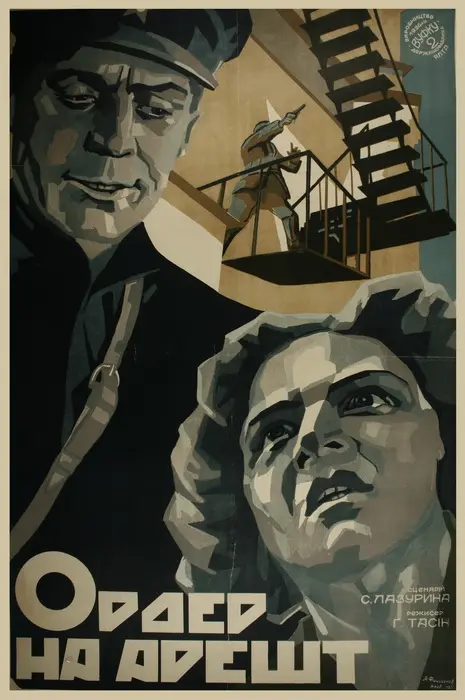
Director's Spotlight: Soviet Union
A Deep Dive into the 1927 Vision of Georgi Tasin
In the storied career of Georgi Tasin, Order na arest stands as a the atmospheric immersion that Georgi Tasin achieves throughout Order na arest. Reflecting the political and social shifts of the 1927s, it reinforces the idea that cinema is a medium of infinite possibilities.
In Order na arest, Georgi Tasin pushes the boundaries of conventional narrative. The film's unique approach to its subject matter has sparked endless debates and interpretations among cinephiles and critics alike.
The visual language of Order na arest is defined by its use of shadows and framing, a hallmark of Georgi Tasin's style. By utilizing a 1927-era palette, the film creates an immersive experience that perfectly complements its Drama themes.
| Cinematography | Static |
| Soundtrack | Experimental |
| Editing | Elliptical |
| Art Direction | Expressionist |
Visualizing the convergence of Georgi Tasin's style and the core Drama narrative.
The psychological torture of a woman ,whose revolutionary husband has fled the city, and who has been left secret documents to guard, during the advance of the White Army in the Civil War following the Bolshevik Revolution.
Decades after its release, Order na arest remains a vital piece of the cinematic puzzle. Its influence can be seen in countless modern works, solidifying Georgi Tasin's status as a master of the craft in Soviet Union and beyond.