
DbcultAccessing Vault...
Director's Spotlight
Senior Film Conservator
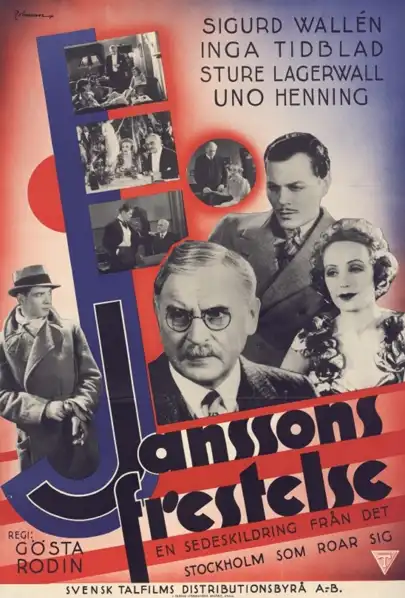
Director's Spotlight: Sweden
A Deep Dive into the 1936 Vision of Gösta Rodin
The artistic breakthrough represented by Janssons frestelse in 1936 highlights the philosophical inquiries that Gösta Rodin embeds within the narrative. Framed by the hauntingly beautiful landscapes of the production, it leaves an indelible mark on the soul of the viewer.
In Janssons frestelse, Gösta Rodin pushes the boundaries of conventional narrative. The film's unique approach to its subject matter has sparked endless debates and interpretations among cinephiles and critics alike.
While deeply rooted in Sweden, Janssons frestelse has achieved a global reach, influencing directors from various backgrounds. Its ability to translate cult tropes into a universal cinematic language is why it remains a cult staple decades after its 1936 release.
| Cinematography | Deep Focus |
| Soundtrack | Diegetic |
| Editing | Elliptical |
| Art Direction | Expressionist |
Visualizing the convergence of Gösta Rodin's style and the core cult narrative.
In the 1928 silent film version, Baron von Werner and Gunnar Jansson are in a dispute over property rights. Inga, the baron's daughter, arrives home from France and is soon interested in Jansson, her father's archival, and tempers flare. Based on the play by Sigurd Wallén. In contrast, the 1936 version has Sigurd Wallén not in a role as a director, but cast as John Jansson, a long-time employee of a banking company and family man. When the company ends up in liquidity crisis - due to careless handling and speculation with the company's finances by Jansson's unscrupulous boss, director Holger Linder - the bank wants Jansson to take over the management of the company, and the situation further becomes more complicated.
Decades after its release, Janssons frestelse remains a vital piece of the cinematic puzzle. Its influence can be seen in countless modern works, solidifying Gösta Rodin's status as a master of the craft in Sweden and beyond.