
DbcultAccessing Vault...
Director's Spotlight
Senior Film Conservator
Director's Spotlight: India
A Deep Dive into the 1932 Vision of G.P. Pawar
The 1932 release of Kailash marked a significant moment for the enduring legacy of G.P. Pawar's artistic contribution to the genre. By challenging the status quo of 1932 cinema, it has cemented its place in the global cult cinema archive.
In Kailash, G.P. Pawar pushes the boundaries of conventional narrative. The film's unique approach to its subject matter has sparked endless debates and interpretations among cinephiles and critics alike.
While deeply rooted in India, Kailash has achieved a global reach, influencing directors from various backgrounds. Its ability to translate Documentary tropes into a universal cinematic language is why it remains a cult staple decades after its 1932 release.
| Cinematography | High-Contrast |
| Soundtrack | Diegetic |
| Editing | Elliptical |
| Art Direction | Expressionist |
Visualizing the convergence of G.P. Pawar's style and the core Documentary narrative.
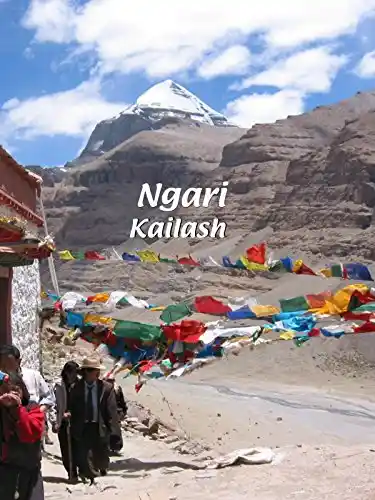
Ngari : Kailash' Is a presentation of a pilgrimage to the holiest mountain for Tibetan Buddhists and several other religions, located far in Western Tibet. The film shows a world in itself where religion, traditions, believes and superstitions takes precedence over any laic activity. The video begins with a background presentation of the religion and life in Tibet under Chinese occupation. After three days of driving in dire conditions and frugal meals, we get to the final stage of the pilgrimage, a three-day, 53 km walk, named kora, around Kailash Holy Mountain, that continuously looms upon. In an atmosphere of legends and spirituality, constantly surrounded by pilgrims turning their sutra wheels in their hands and by yaks loaded with gear and food, we sleep in high altitude monasteries, eventually reaching a prayer flag covered pass, Drolma La, at 5630 meters. Ngari: Kailash (60 minutes) covers Lhatse, Saga, Dzongba, Darchen and Mt. Kailash kora.
Decades after its release, Kailash remains a vital piece of the cinematic puzzle. Its influence can be seen in countless modern works, solidifying G.P. Pawar's status as a master of the craft in India and beyond.