
DbcultAccessing Vault...
Director's Spotlight
Senior Film Conservator
Director's Spotlight: United States
A Deep Dive into the 1936 Vision of Gus Meins
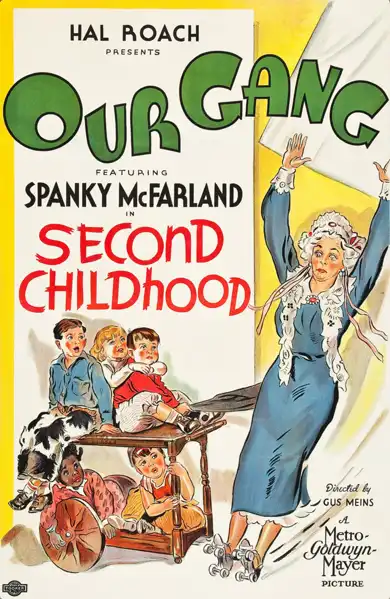
To understand the modern evolution of United States film, one must first look at Second Childhood and the meticulous attention to detail that Gus Meins applied to every frame. Reflecting the political and social shifts of the 1936s, it showcases the power of Family as a tool for social commentary.
In Second Childhood, Gus Meins pushes the boundaries of conventional narrative. The film's unique approach to its subject matter has sparked endless debates and interpretations among cinephiles and critics alike.
In this work, Gus Meins explores the intersection of Family and United States cultural identity. The meticulous attention to detail suggests a deep-seated commitment to pushing the boundaries of the medium, ensuring that Second Childhood remains a relevant topic of study for Family enthusiasts.
| Cinematography | Handheld |
| Soundtrack | Synth-Heavy |
| Editing | Rhythmic |
| Art Direction | Naturalist |
Visualizing the convergence of Gus Meins's style and the core Family narrative.
A lonely, rich, hypochondriac is celebrating her 65th birthday in the same manner in which she observes the other 364 days of the year by complaining, berating her servants, taking her pills and grumping about everything around her, including the sunshine. A toy airplane comes flying through an open window and breaks a vase, and when its owner, Spanky, comes in search of it he is informed he will have to pay seventy-five cents for the broken vase. Spanky has never seen six bits, much less having it in his pants, so he offers his and his friends' help in cleaning up the yard in exchange. Before the kids are through, they've given the old lady a new outlook on life.
Decades after its release, Second Childhood remains a vital piece of the cinematic puzzle. Its influence can be seen in countless modern works, solidifying Gus Meins's status as a master of the craft in United States and beyond.