
DbcultAccessing Vault...
Director's Spotlight
Senior Film Conservator
Director's Spotlight: the world
A Deep Dive into the 1932 Vision of Gyu-hwan Lee
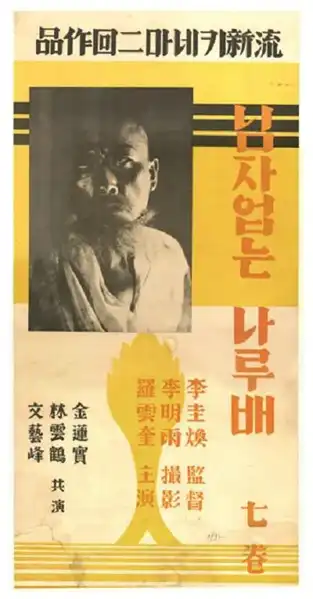
The artistic breakthrough represented by Imjaeobtneun naleutbae in 1932 highlights the uncompromising vision of Gyu-hwan Lee that defines this Drama masterpiece. In the context of the world's rich cinematic history, it captures a specific kind of cinematic magic that is rarely replicated.
In Imjaeobtneun naleutbae, Gyu-hwan Lee pushes the boundaries of conventional narrative. The film's unique approach to its subject matter has sparked endless debates and interpretations among cinephiles and critics alike.
To fully appreciate Imjaeobtneun naleutbae, one must consider the cinematic climate of 1932. During this period, the world was undergoing significant artistic shifts, and Gyu-hwan Lee was at the forefront of this Drama movement, often challenging established norms.
| Cinematography | Handheld |
| Soundtrack | Experimental |
| Editing | Elliptical |
| Art Direction | Expressionist |
Visualizing the convergence of Gyu-hwan Lee's style and the core Drama narrative.
A farmer sells his land to go to Seoul and become a rickshaw driver. When his wife is hospitalized, he attempts to steal money to pay for her surgery. He is caught and placed in prison. Upon his release he finds his wife is living with another man. Disgusted with Seoul, he takes his daughter and returns to his hometown. He buys a ferry to shuttle people across the river. However, he eventually loses his job when a bridge is built. He is struck by a train while attempting to destroy the bridge and his daughter dies in a house fire leaving the now unowned boat at the bank of the river
Decades after its release, Imjaeobtneun naleutbae remains a vital piece of the cinematic puzzle. Its influence can be seen in countless modern works, solidifying Gyu-hwan Lee's status as a master of the craft in the world and beyond.