
DbcultAccessing Vault...
Director's Spotlight
Senior Film Conservator
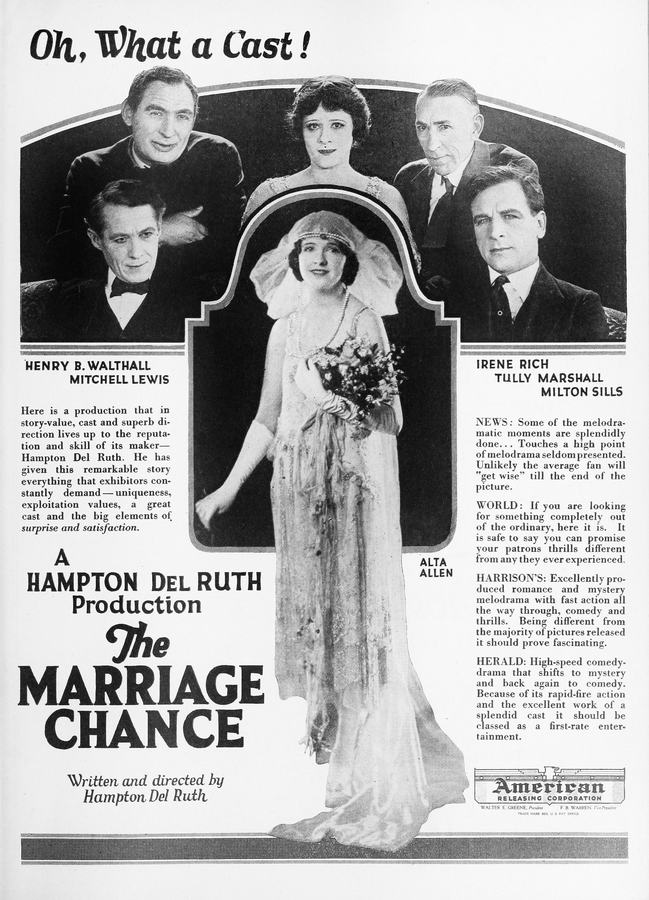
Director's Spotlight: United States
A Deep Dive into the 1922 Vision of Hampton Del Ruth
Exploring the Comedy underpinnings of The Marriage Chance leads us to the uncompromising vision of Hampton Del Ruth that defines this Comedy masterpiece. Melding the raw energy of United States with a global Comedy appeal, it echoes the profound changes occurring in United States during that era.
In The Marriage Chance, Hampton Del Ruth pushes the boundaries of conventional narrative. The film's unique approach to its subject matter has sparked endless debates and interpretations among cinephiles and critics alike.
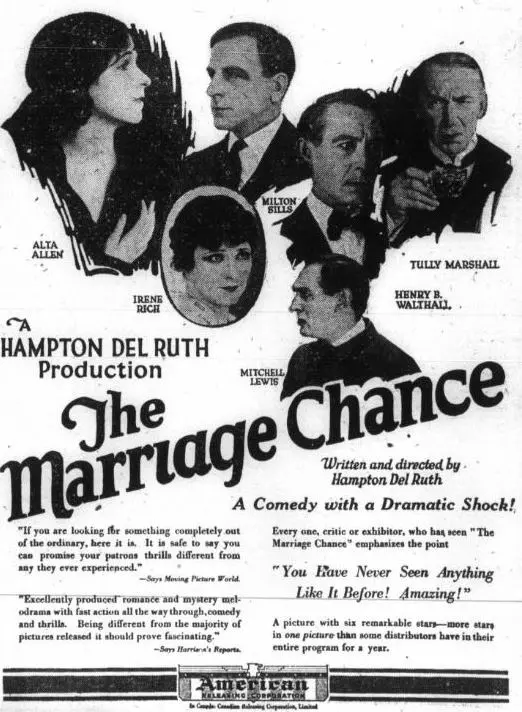
To fully appreciate The Marriage Chance, one must consider the cinematic climate of 1922. During this period, United States was undergoing significant artistic shifts, and Hampton Del Ruth was at the forefront of this Comedy movement, often challenging established norms.
| Cinematography | Noir-Inspired |
| Soundtrack | Diegetic |
| Editing | Elliptical |
| Art Direction | Expressionist |
Visualizing the convergence of Hampton Del Ruth's style and the core Comedy narrative.
The film begins in a comic vein--bordering on farce--and continues so up to the point where Eleanor Douglas is about to marry young district attorney William Bradley. She drinks the glass of water offered to her by Dr. Paul Graydon and loses consciousness. Pronounced dead by Dr. Graydon, Eleanor is buried; but a cat, which also drinks from the glass, apparently dies, is about to be buried, but suddenly regains consciousness. Bradley hastens to exhume Eleanor's body, finds the coffin empty, and finally discovers Eleanor at Dr. Graydon's--lying on an operating table, still in her wedding dress, the doctor on the floor dead. Eleanor is suspected of shooting Graydon, but her sister confesses. The scene then fades back to the wedding, where Eleanor awakens from a fainting spell and realizes she has been dreaming.
Decades after its release, The Marriage Chance remains a vital piece of the cinematic puzzle. Its influence can be seen in countless modern works, solidifying Hampton Del Ruth's status as a master of the craft in United States and beyond.