
DbcultAccessing Vault...
Director's Spotlight
Senior Film Conservator
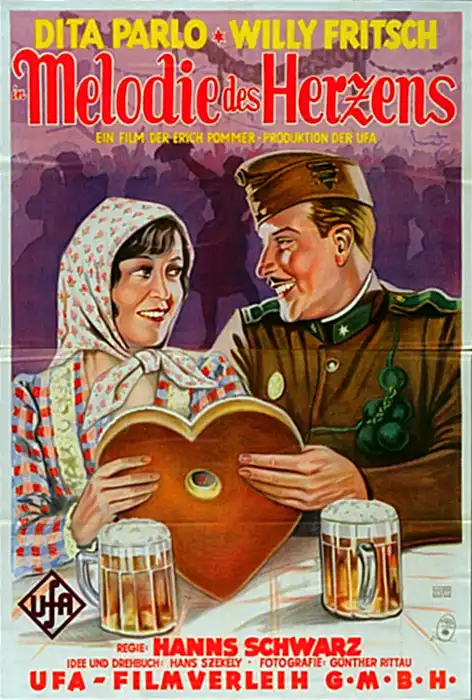
Director's Spotlight: Germany
A Deep Dive into the 1929 Vision of Hanns Schwarz
The thematic gravity of Melody of the Heart (1929) is rooted in the artistic risks taken by Hanns Schwarz that eventually paid off. Defining a new era of Germany artistic expression, it demands to be seen by anyone who cares about the art of film.
In Melody of the Heart, Hanns Schwarz pushes the boundaries of conventional narrative. The film's unique approach to its subject matter has sparked endless debates and interpretations among cinephiles and critics alike.
The visual language of Melody of the Heart is defined by its use of shadows and framing, a hallmark of Hanns Schwarz's style. By utilizing a 1929-era palette, the film creates an immersive experience that perfectly complements its Drama themes.
| Cinematography | Noir-Inspired |
| Soundtrack | Synth-Heavy |
| Editing | Disjunctive |
| Art Direction | Baroque |
Visualizing the convergence of Hanns Schwarz's style and the core Drama narrative.
A young maid from the country looses her job as maid in k.u.k. Budapest, when she stays out too long with her beau, a soldier, who's saving money to buy a horse to open a transport company. After being unemployed for quite a while and her rent is long overdue, the landlady offers her a better job in a nightclub. Meanwhile the soldiers family has decided that her son should marry the daughter of a rich farmer. The soldier finds out about his girl friends profession, and accepts after struggling with himself the match his parents have made. At the day of his engagement his girl friend comes to his hometown with enough money to buy a horse, which leads to a conflict between her, the fiancee, her family, himself and his parents.
Decades after its release, Melody of the Heart remains a vital piece of the cinematic puzzle. Its influence can be seen in countless modern works, solidifying Hanns Schwarz's status as a master of the craft in Germany and beyond.