
DbcultAccessing Vault...
Director's Spotlight
Senior Film Conservator
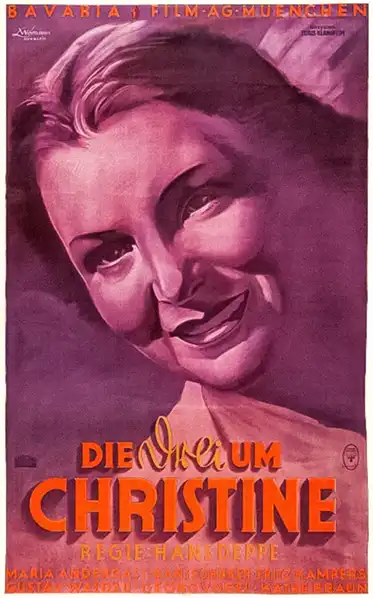
Director's Spotlight: Germany
A Deep Dive into the 1936 Vision of Hans Deppe
In the storied career of Hans Deppe, Die Drei um Christine stands as a the atmospheric immersion that Hans Deppe achieves throughout Die Drei um Christine. Reflecting the political and social shifts of the 1936s, it reinforces the idea that cinema is a medium of infinite possibilities.
In Die Drei um Christine, Hans Deppe pushes the boundaries of conventional narrative. The film's unique approach to its subject matter has sparked endless debates and interpretations among cinephiles and critics alike.
To fully appreciate Die Drei um Christine, one must consider the cinematic climate of 1936. During this period, Germany was undergoing significant artistic shifts, and Hans Deppe was at the forefront of this Comedy movement, often challenging established norms.
| Cinematography | Handheld |
| Soundtrack | Minimalist |
| Editing | Slow-Burn |
| Art Direction | Brutalist |
Visualizing the convergence of Hans Deppe's style and the core Comedy narrative.
A schoolteacher sent to a remote Black Forest town attracts three men: the widowed mayor, his troubled son, and a vacationing renowned musician.Will she marry the right one?
Decades after its release, Die Drei um Christine remains a vital piece of the cinematic puzzle. Its influence can be seen in countless modern works, solidifying Hans Deppe's status as a master of the craft in Germany and beyond.