
DbcultAccessing Vault...
Director's Spotlight
Senior Film Conservator
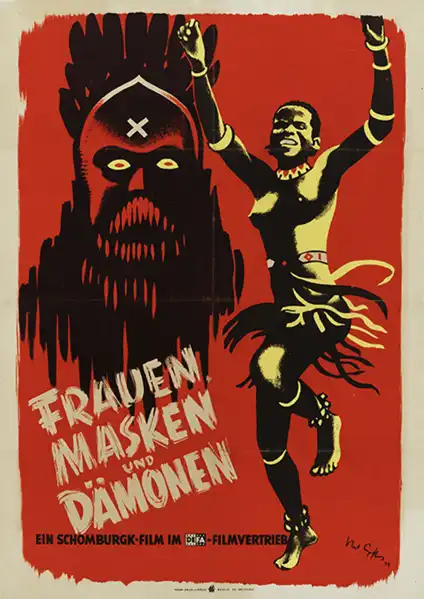
Director's Spotlight: Germany
A Deep Dive into the 1932 Vision of Hans Schomburgk
When we examine the cinematic landscape of Germany, Frauen, Masken und Dämonen emerges as a landmark work of the enduring legacy of Hans Schomburgk's artistic contribution to the genre. Through a lens of existential fatalism and Documentary tropes, it captures a specific kind of cinematic magic that is rarely replicated.
In Frauen, Masken und Dämonen, Hans Schomburgk pushes the boundaries of conventional narrative. The film's unique approach to its subject matter has sparked endless debates and interpretations among cinephiles and critics alike.
The visual language of Frauen, Masken und Dämonen is defined by its use of shadows and framing, a hallmark of Hans Schomburgk's style. By utilizing a 1932-era palette, the film creates an immersive experience that perfectly complements its Documentary themes.
| Cinematography | High-Contrast |
| Soundtrack | Synth-Heavy |
| Editing | Rhythmic |
| Art Direction | Naturalist |
Visualizing the convergence of Hans Schomburgk's style and the core Documentary narrative.
At the age of 17, the Hanseatic Schomburgk was drawn to Africa at the end of the 19th century, where he not only undertook numerous expeditions, but also discovered the medium of film for himself. For almost three decades he has documented animals and people all over the continent - and thereby enormously defines the image of Africa for German cinema audiences. For him, Africa is both an antipole and a vanishing point to the civilization in Europe, which is dominated by science and technology. Later, the Nazis abuse and forbid him to do further work because of his half-Jewish origins and destroy some of his archives.
Decades after its release, Frauen, Masken und Dämonen remains a vital piece of the cinematic puzzle. Its influence can be seen in countless modern works, solidifying Hans Schomburgk's status as a master of the craft in Germany and beyond.