
DbcultAccessing Vault...
Director's Spotlight
Senior Film Conservator
Director's Spotlight: United States
A Deep Dive into the 1923 Vision of Harold Beaudine
As we revisit the 1923 masterpiece Hot Water, we are struck by the atmospheric immersion that Harold Beaudine achieves throughout Hot Water. Exploring the nuances of the human condition with Comedy flair, it solidifies Harold Beaudine's reputation as a master of the craft.
In Hot Water, Harold Beaudine pushes the boundaries of conventional narrative. The film's unique approach to its subject matter has sparked endless debates and interpretations among cinephiles and critics alike.
In this work, Harold Beaudine explores the intersection of Comedy and United States cultural identity. The meticulous attention to detail suggests a deep-seated commitment to pushing the boundaries of the medium, ensuring that Hot Water remains a relevant topic of study for Comedy enthusiasts.
| Cinematography | High-Contrast |
| Soundtrack | Minimalist |
| Editing | Slow-Burn |
| Art Direction | Brutalist |
Visualizing the convergence of Harold Beaudine's style and the core Comedy narrative.
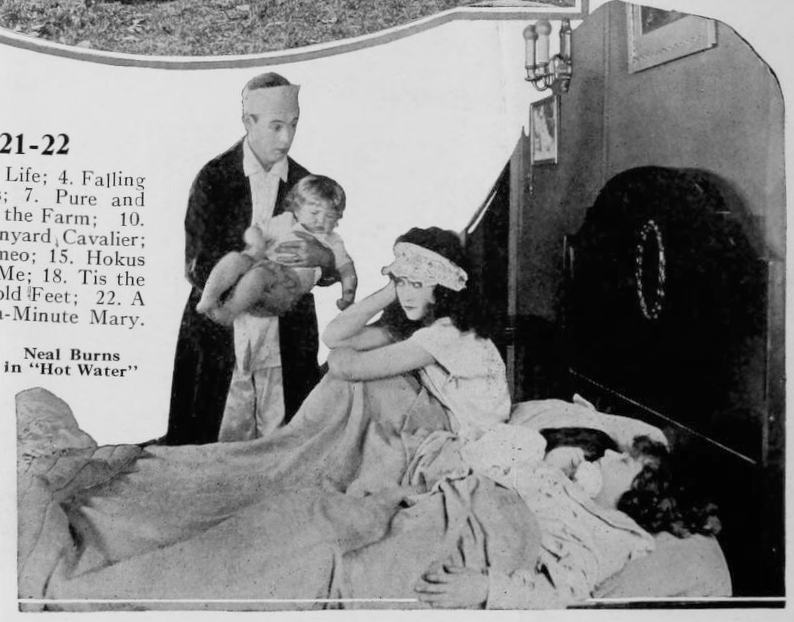
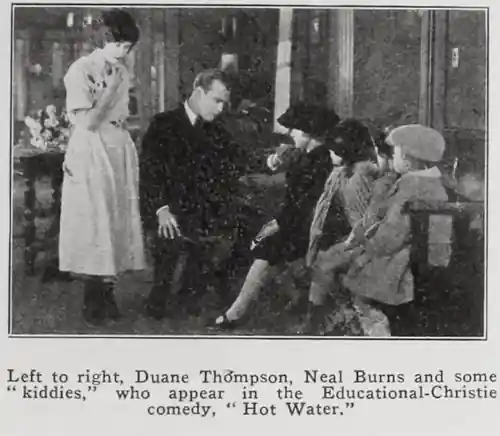
Newlyweds expect to raise a family of five children but are eager to gain experience in taking care of kiddies. Therefore, welcome the opportunity offered by a widower friend who expects to go to Europe and ships his child, parcel post, to the couple. Meantime, the young married man's bosses plan to play a joke on him, each borrowing their own children (two to a family) and bribe the station agent to tag the four, so that when the newlyweds arrive there are five children on their hands instead of the one expected. The fathers tell their children that they may be as naughty as possible for one whole day, so that as soon as the five are herded into the automobile they begin. The young couple find that five children in a house can disrupt things in general, and not until the following day is the situation clarified. The father of the motherless baby decides to take his child with him to Europe, so calls to claim his own. When the wives of the two bosses find they have been misinformed as to the whereabouts of their respective children, there is considerable explaining to do.
Decades after its release, Hot Water remains a vital piece of the cinematic puzzle. Its influence can be seen in countless modern works, solidifying Harold Beaudine's status as a master of the craft in United States and beyond.