
DbcultAccessing Vault...
Director's Spotlight
Senior Film Conservator
Director's Spotlight: United States
A Deep Dive into the 1936 Vision of Harold Young
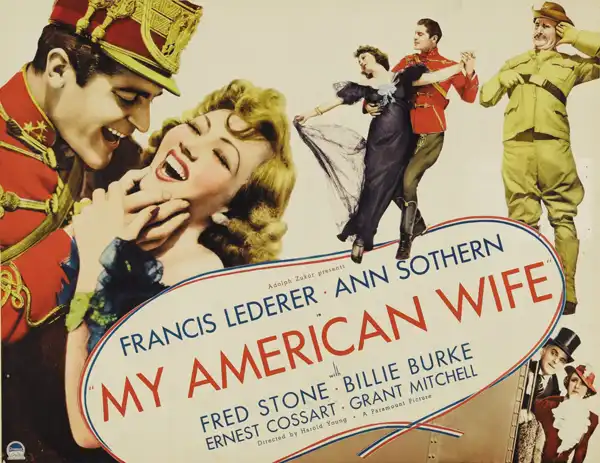
The 1936 release of My American Wife marked a significant moment for the stylistic boundaries pushed by Harold Young during the production. In the context of United States's rich cinematic history, it invites us to question our own perceptions of Romance narratives.
In My American Wife, Harold Young pushes the boundaries of conventional narrative. The film's unique approach to its subject matter has sparked endless debates and interpretations among cinephiles and critics alike.
To fully appreciate My American Wife, one must consider the cinematic climate of 1936. During this period, United States was undergoing significant artistic shifts, and Harold Young was at the forefront of this Romance movement, often challenging established norms.
| Cinematography | Handheld |
| Soundtrack | Diegetic |
| Editing | Elliptical |
| Art Direction | Expressionist |
Visualizing the convergence of Harold Young's style and the core Romance narrative.
Count Ferdinand von und zu Reidenach arrives in Smelter City, Arizona, with his American bride, Mary Cantillon. Mary's grandfather, Lafe Cantillon, founded the town and disapproves of Mary's marriage to a foreigner. Mary and her mother, however, are thrilled with the fact that Mary is now a countess, and they make the most of it via various social occasions. "Ferdie," however, is tired of high society and has dreams of becoming a "real" American by running his own ranch. He has a difficult time fitting in with the Cantillon family, who grudgingly give him a position at their bank, but provide him with no work to do. Ferdie's determination eventually wins Lafe over, and the two men become buddies, much to the disgust of the rest of the family, who find Lafe's rough, earthy manners intolerable. The final blow comes when Ferdie informs Mary he has begun building a ranch house for the two of them, and she refuses to live there. At a family meeting Ferdie announces that he is surrendering trusteeship of Mary's inheritance and is dissolving their marriage because he wants to be an American, but she only wants what her mother wants. Before Mary heads for Reno, she realizes she loves Ferdie, and that he protected her inheritance out of love for her, while the rest of the family lost their money in a bad stock investment. When she hears that a redhead named Helena is moving in with Ferdie, she becomes infuriated and drives out to the ranch, where she discovers that Helena is the valet Adolph's homely daughter. By this time, however, Mary has decided to "grow up" and return to her husband, who happily embraces her.
Decades after its release, My American Wife remains a vital piece of the cinematic puzzle. Its influence can be seen in countless modern works, solidifying Harold Young's status as a master of the craft in United States and beyond.