
DbcultAccessing Vault...
Director's Spotlight
Senior Film Conservator
Director's Spotlight: United States
A Deep Dive into the 1922 Vision of Harry Beaumont
Under the meticulous guidance of Harry Beaumont, June Madness became the cultural zeitgeist captured so perfectly by Harry Beaumont in 1922. Driven by an uncompromising commitment to Comedy excellence, it remains a vital reference point for anyone studying the evolution of Harry Beaumont.
In June Madness, Harry Beaumont pushes the boundaries of conventional narrative. The film's unique approach to its subject matter has sparked endless debates and interpretations among cinephiles and critics alike.
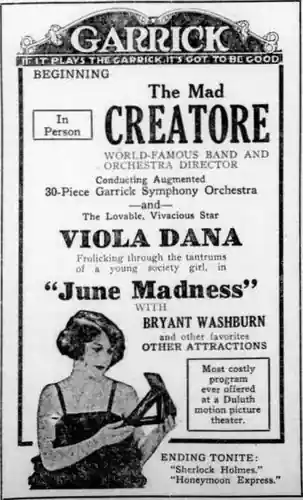
To fully appreciate June Madness, one must consider the cinematic climate of 1922. During this period, United States was undergoing significant artistic shifts, and Harry Beaumont was at the forefront of this Comedy movement, often challenging established norms.
| Cinematography | Handheld |
| Soundtrack | Synth-Heavy |
| Editing | Rhythmic |
| Art Direction | Naturalist |
Visualizing the convergence of Harry Beaumont's style and the core Comedy narrative.
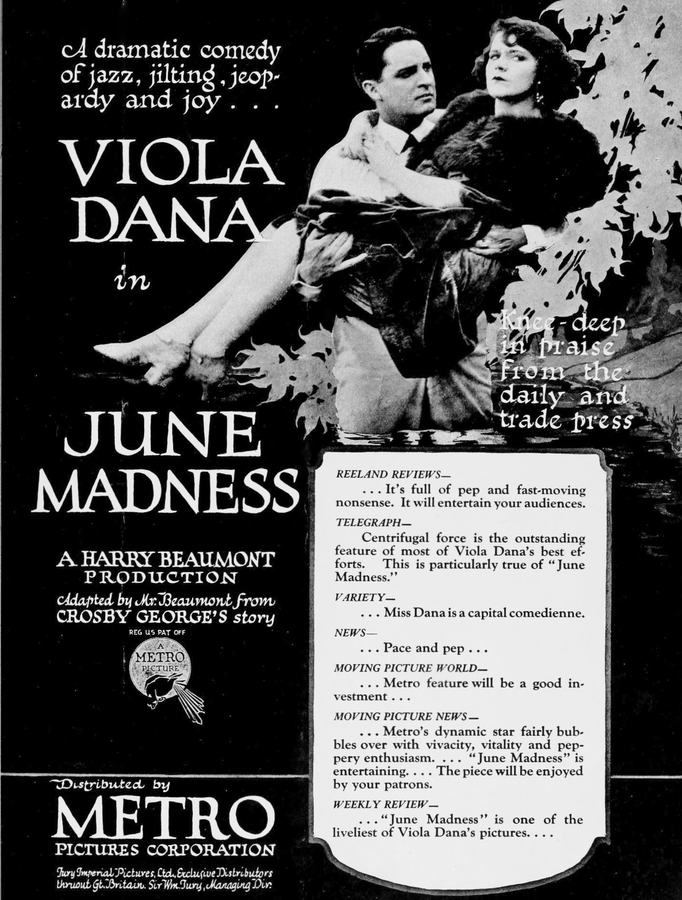
Clytie Whitmore (Viola Dana) finally consents to marry Cadbury Todd (Gerald Pring), but while walking down the aisle she runs out of the church and into the passing car of Ken Pauling (Bryant Washburn), a well-known jazz musician. Shortly after returning home, Clytie escapes from her locked room and goes to Pennetti's roadhouse, where Ken is appearing, closely pursued by gossip columnist Hamilton Peeke (Leon Barry). She dances in the show in place of Sonora, then escapes with Ken when the roadhouse is raided. They are married and receive the family blessing.
Decades after its release, June Madness remains a vital piece of the cinematic puzzle. Its influence can be seen in countless modern works, solidifying Harry Beaumont's status as a master of the craft in United States and beyond.