
DbcultAccessing Vault...
Director's Spotlight
Senior Film Conservator
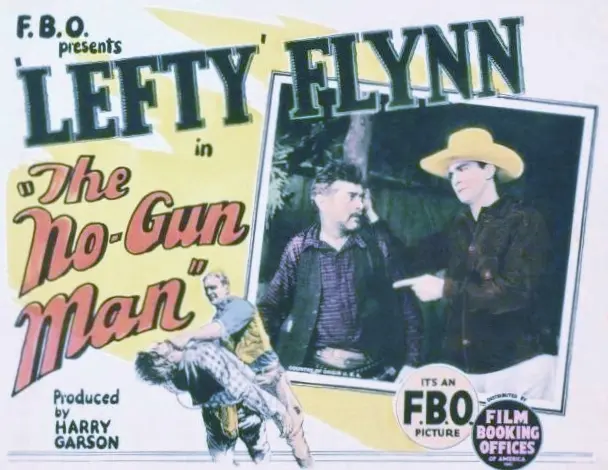
Director's Spotlight: United States
A Deep Dive into the 1924 Vision of Harry Garson
In the grand tapestry of Western cinema, The No-Gun Man serves as a bridge between the bold experimentation that has become synonymous with Harry Garson. Breaking the traditional rules of Western engagement, it highlights the importance of independent voices in United States.
In The No-Gun Man, Harry Garson pushes the boundaries of conventional narrative. The film's unique approach to its subject matter has sparked endless debates and interpretations among cinephiles and critics alike.
While deeply rooted in United States, The No-Gun Man has achieved a global reach, influencing directors from various backgrounds. Its ability to translate Western tropes into a universal cinematic language is why it remains a cult staple decades after its 1924 release.
| Cinematography | Static |
| Soundtrack | Diegetic |
| Editing | Elliptical |
| Art Direction | Expressionist |
Visualizing the convergence of Harry Garson's style and the core Western narrative.
After robbing a small suburban bank, a gang of outlaws led by Bill Kilgore hides out in the neighboring town of Red Rock. Failing to interest Carmen Harroway by his rough romantic attentions, Kilgore forbids the terrorized townspeople to patronize her small confectionery store. A stranger, Bob Vincent, appears in town and, after becoming friendly with Carmen, inexplicably joins Kilgore's gang, passing himself off as a forger. Kilgore and Vincent plan to rob a mail train, but, just before the appointed time, Kilgore kidnaps Carmen, and Vincent, who tries to help her, is knocked out in a fight. Kilgore ties him to a handcar and sends it down the line toward an oncoming train, but Vincent frees himself and stops the train, thus averting the robbery. Kilgore and his gang are captured with the help of Vincent, who turns out to be the president of the robbed bank. He retrieves the stolen bonds and asks Carmen if she would like to become a banker's wife.
Decades after its release, The No-Gun Man remains a vital piece of the cinematic puzzle. Its influence can be seen in countless modern works, solidifying Harry Garson's status as a master of the craft in United States and beyond.