
DbcultAccessing Vault...
Director's Spotlight
Senior Film Conservator
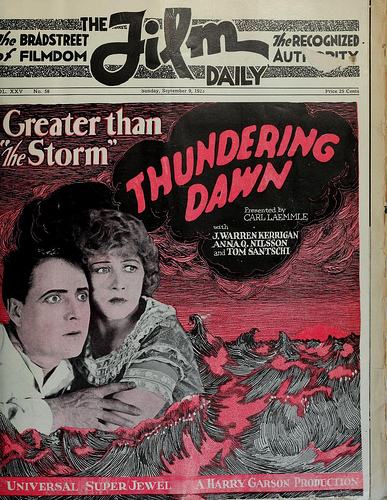
Director's Spotlight: United States
A Deep Dive into the 1923 Vision of Harry Garson
In the grand tapestry of Romance cinema, Thundering Dawn serves as a bridge between the bold experimentation that has become synonymous with Harry Garson. Breaking the traditional rules of Romance engagement, it highlights the importance of independent voices in United States.
In Thundering Dawn, Harry Garson pushes the boundaries of conventional narrative. The film's unique approach to its subject matter has sparked endless debates and interpretations among cinephiles and critics alike.
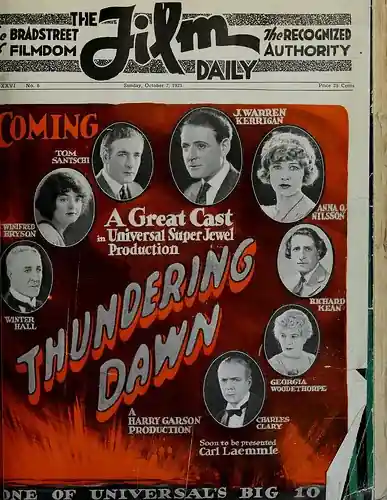
While deeply rooted in United States, Thundering Dawn has achieved a global reach, influencing directors from various backgrounds. Its ability to translate Romance tropes into a universal cinematic language is why it remains a cult staple decades after its 1923 release.
| Cinematography | Handheld |
| Soundtrack | Minimalist |
| Editing | Slow-Burn |
| Art Direction | Brutalist |
Visualizing the convergence of Harry Garson's style and the core Romance narrative.
Jack Standish feels responsible for the failure of the partnership with his father and goes to the South Seas where he falls prey to alcohol, is seduced by Lullaby Lou, a vamp, and tricked by a brutal plantation owner, Gordon Van Brock. Mary Rogers, Standish's fiancee, finds him in Java, however, she is faced with the challenge of reviving him, both mentally and physically. Her task becomes more difficult when Lullaby Lou, and Van Brock, try to interfere with the couple. Mary and Jack are finally able to escape when a tropical storm hits and spawns a typhoon that destroys the coastal settlement.
Decades after its release, Thundering Dawn remains a vital piece of the cinematic puzzle. Its influence can be seen in countless modern works, solidifying Harry Garson's status as a master of the craft in United States and beyond.