
DbcultAccessing Vault...
Director's Spotlight
Senior Film Conservator
Director's Spotlight: United States
A Deep Dive into the 1914 Vision of Harry Handworth
The evocative power of When Fate Leads Trump stems from the unique collaboration between the subversive storytelling techniques employed by Harry Handworth in 1914. Synthesizing the best elements of United States and international cinema, it reminds us of the fragility and beauty of the 1914s.
In When Fate Leads Trump, Harry Handworth pushes the boundaries of conventional narrative. The film's unique approach to its subject matter has sparked endless debates and interpretations among cinephiles and critics alike.
While deeply rooted in United States, When Fate Leads Trump has achieved a global reach, influencing directors from various backgrounds. Its ability to translate cult tropes into a universal cinematic language is why it remains a cult staple decades after its 1914 release.
| Cinematography | Static |
| Soundtrack | Synth-Heavy |
| Editing | Disjunctive |
| Art Direction | Baroque |
Visualizing the convergence of Harry Handworth's style and the core cult narrative.
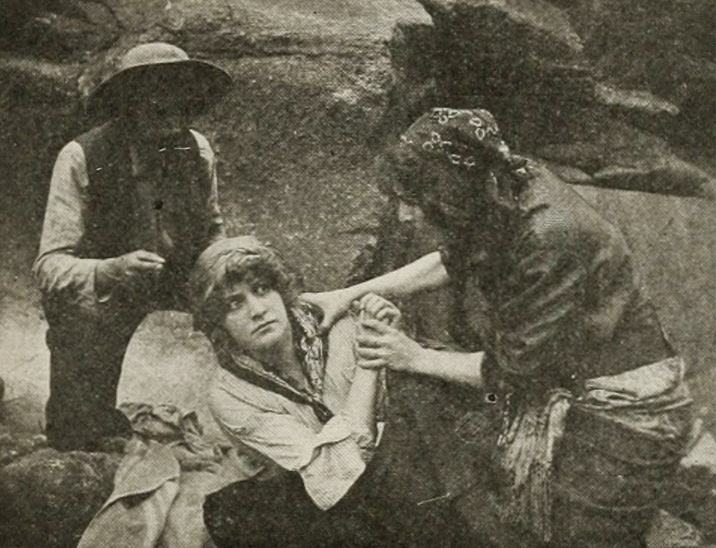
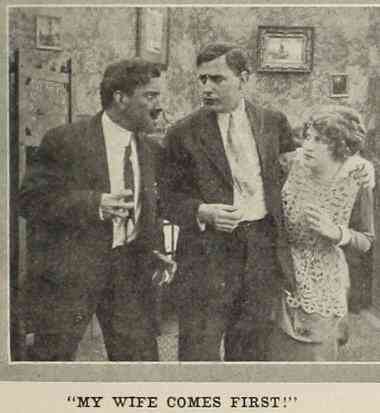
Gordon, the only son of a smuggler chief, is sent with a companion from his father's stronghold to travel so that he may learn the ways of the world. At their first stopping place he falls in love with a young woman, Marion Williams, and marries her against his father's orders, keeping her in ignorance of who he is and what his past has been. Shortly after his marriage he receives a message that his father is dying, and in his attempt to visit his parent secretly is seriously injured. His wife nurses him back to health, and then demands an explanation. He confessed all, and because of the great love she bears him and their child she forgives and even consents to accompany him on a visit to his father. While there the band, including Gordon, is captured by the customs police, but Marion escapes, becomes lost in the wilderness and is found almost drowned in a mountain stream by Jim Bartlett, the paymaster of a lumber camp. As a result of her privations her memory of the past is a blank. She marries Jim. After several years Gordon and his companion are released from prison and return to the mountains. They apply to Bartlett for work, but he has no places for them. Continuing on their way they reach Jim's cabin, and Gordon, leaving his companion on the outside as a lookout, enters to rob it. Inside he sees a woman and attempts to overpower her. In the struggle he meets her face to face; it is his wife. The shock restores her memory. At this moment Jim enters the cabin and in astonishment beholds his wife in another man's arms. Not receiving an explanation, he turns to Gordon and says, "I will give you one hour to explain or fight." For Marion's sake he leaves in silence, removes the bullets from the cartridges in his revolver, and in the duel which follows is mortally wounded. His foe, learning of his act, removes him to the cabin where Gordon, with his last breath, whispers, "I married her years ago; she thought me dead."
Decades after its release, When Fate Leads Trump remains a vital piece of the cinematic puzzle. Its influence can be seen in countless modern works, solidifying Harry Handworth's status as a master of the craft in United States and beyond.