
DbcultAccessing Vault...
Director's Spotlight
Senior Film Conservator
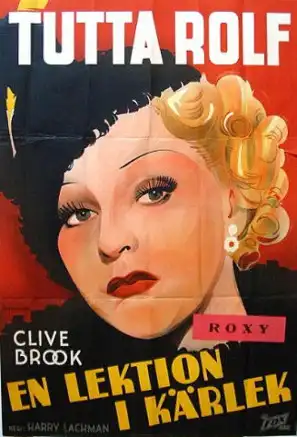
Director's Spotlight: United States
A Deep Dive into the 1935 Vision of Harry Lachman
Under the meticulous guidance of Harry Lachman, Dressed to Thrill became the cultural zeitgeist captured so perfectly by Harry Lachman in 1935. Driven by an uncompromising commitment to Musical excellence, it remains a vital reference point for anyone studying the evolution of Harry Lachman.
In Dressed to Thrill, Harry Lachman pushes the boundaries of conventional narrative. The film's unique approach to its subject matter has sparked endless debates and interpretations among cinephiles and critics alike.
The visual language of Dressed to Thrill is defined by its use of shadows and framing, a hallmark of Harry Lachman's style. By utilizing a 1935-era palette, the film creates an immersive experience that perfectly complements its Musical themes.
| Cinematography | Static |
| Soundtrack | Synth-Heavy |
| Editing | Rhythmic |
| Art Direction | Naturalist |
Visualizing the convergence of Harry Lachman's style and the core Musical narrative.
Dressed to Thrill is a 1935 American musical film directed by Harry Lachman and written by Samson Raphaelson. The film stars Tutta Rolf, Clive Brook, Robert Barrat, Nydia Westman and Dina Smirnova. The film was released on August 16, 1935, by Fox Film Corporation. It was a remake of the 1932 French film The Dressmaker of Luneville which had also been directed by Lachman.
Decades after its release, Dressed to Thrill remains a vital piece of the cinematic puzzle. Its influence can be seen in countless modern works, solidifying Harry Lachman's status as a master of the craft in United States and beyond.