
DbcultAccessing Vault...
Director's Spotlight
Senior Film Conservator
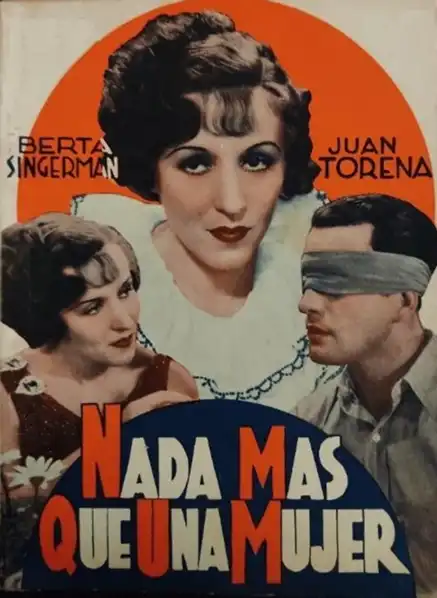
Director's Spotlight: United States
A Deep Dive into the 1934 Vision of Harry Lachman
The evocative power of Nada más que una mujer stems from the unique collaboration between the subversive storytelling techniques employed by Harry Lachman in 1934. Synthesizing the best elements of United States and international cinema, it reminds us of the fragility and beauty of the 1934s.
In Nada más que una mujer, Harry Lachman pushes the boundaries of conventional narrative. The film's unique approach to its subject matter has sparked endless debates and interpretations among cinephiles and critics alike.
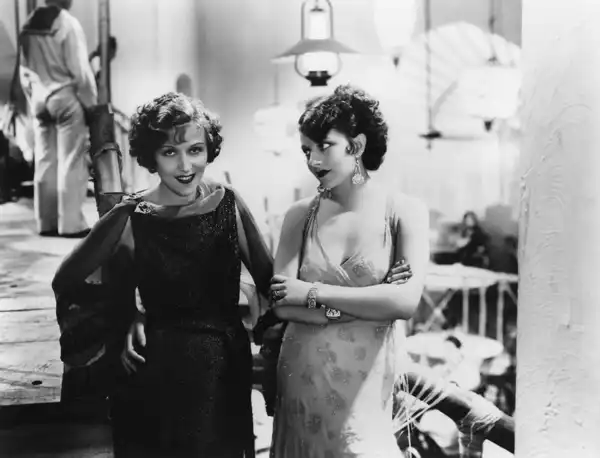
In this work, Harry Lachman explores the intersection of Drama and United States cultural identity. The meticulous attention to detail suggests a deep-seated commitment to pushing the boundaries of the medium, ensuring that Nada más que una mujer remains a relevant topic of study for Drama enthusiasts.
| Cinematography | Static |
| Soundtrack | Orchestral |
| Editing | Slow-Burn |
| Art Direction | Brutalist |
Visualizing the convergence of Harry Lachman's style and the core Drama narrative.
David Landeen of San Francisco arrives at the port of Ropangi, British North Borneo, in order to take over his deceased uncle's plantation on the neighboring island of Tilo. Beauregard, who owns the next plantation and who has taken control of the Landeen property, sends a group of island natives to beat David up and take his papers. The natives leave David for dead, and Mona, who sings at a casino, rescues him. She calls Dr. Otto Steiner, who reports that David has been temporarily blinded and that he must convalesce in Mona's room, despite Mona's protestations, because the tropical sun might cause permanent damage to his eyes. At the casino that night, Beauregard asks Mona to live with him on his island, and he tries to give her a pearl. She refuses both offers, and her friend Gilda chides her for not taking advantage of Beauregard's bounty. Beauregard follows Mona home and after forcing his way into her room, sees a figure in bed, whom he does not recognize as David. When Beauregard grabs Mona, she slashes his arm with a knife. Ashamed of her circumstances, Mona tells David, whose eyes are still bandaged, that her apartment is actually a wing of a large plantation house owned by her rich father. When David declares to Mona that he loves her, he prematurely pulls the bandages from his eyes, extols her beauty, and then asks her to marry him. She agrees, but Gilda later insists that David will leave her when he discovers that she is not a rich man's daughter but only a cabaret singer. Mona seeks the advice of her friend, Dr. Steiner, and he recommends that she go to San Francisco, where he will arrange for her a job as a student nurse. Mona decides to take his advice and, in a note she leaves for David, says she is going away to become the girl that he believes her to be. At the boat dock, Beauregard lures Mona on board a schooner by offering her a ride to Sandican, where, he says, she can pick up the boat bound for the States. Beauregard, however, takes her to his plantation on Tilo and keeps her there by force, hoping that eventually she will want him. When he discovers that Mona has left, David tells Dr. Steiner that her past does not matter to him, but the doctor convinces him to give her a chance to remake her life. A week later, David, now recovered, arrives in Tilo to take over the Landern plantation. He is shocked to see Mona at Beauregard's house, and when she acts as if their romance was not serious, David leaves in disgust for his own house. Beauregard then instructs his cohort Hansen to kill David, but Hansen refuses, and Beauregard knocks him out. Mona, who has overheard their quarrel, gets a gun, but Beauregard takes it away. After she pleads for David's life and relates how she came to know him, Beauregard slugs her and goes off to David's with his gun. Mona follows and then struggles with Beauregard as he is about to shoot David. As Beauregard and David fight, David gets the gun. While Mona explains to David that she did not willingly leave Ropangi with Beauregard, Beauregard grabs the gun, and the two men struggle once again. As Hansen arrives, Beauregard knocks David out. Mona gets the gun, and as Beauregard is about to kill David with his machete, Mona shoots Beauregard three times. Hansen then tells the natives that Beauregard died accidentally. While David is unconscious, Mona goes to the boat to leave. David awakens, however, and stops her from going, despite her pleas, by telling her that he needs her. She falls to her knees and they embrace.
Decades after its release, Nada más que una mujer remains a vital piece of the cinematic puzzle. Its influence can be seen in countless modern works, solidifying Harry Lachman's status as a master of the craft in United States and beyond.