
DbcultAccessing Vault...
Director's Spotlight
Senior Film Conservator
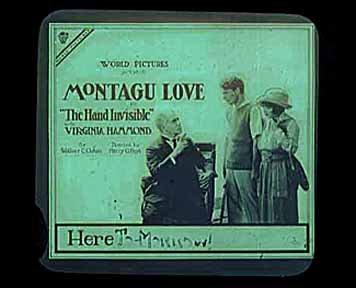
Director's Spotlight: United States
A Deep Dive into the 1919 Vision of Harry O. Hoyt
Exploring the cult underpinnings of The Hand Invisible leads us to the uncompromising vision of Harry O. Hoyt that defines this cult masterpiece. Melding the raw energy of United States with a global cult appeal, it echoes the profound changes occurring in United States during that era.
In The Hand Invisible, Harry O. Hoyt pushes the boundaries of conventional narrative. The film's unique approach to its subject matter has sparked endless debates and interpretations among cinephiles and critics alike.
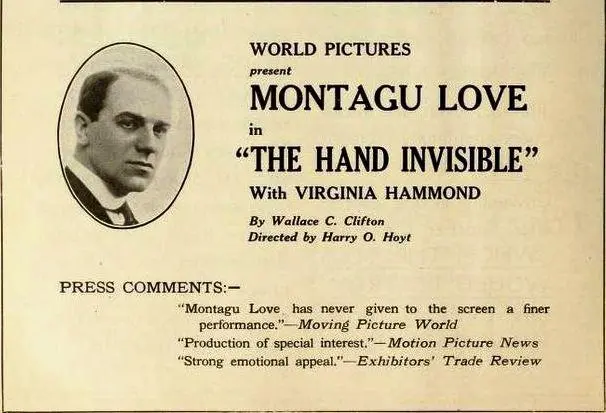
The visual language of The Hand Invisible is defined by its use of shadows and framing, a hallmark of Harry O. Hoyt's style. By utilizing a 1919-era palette, the film creates an immersive experience that perfectly complements its cult themes.
| Cinematography | Noir-Inspired |
| Soundtrack | Orchestral |
| Editing | Invisible |
| Art Direction | Kitsch |
Visualizing the convergence of Harry O. Hoyt's style and the core cult narrative.
Steel magnate Rodney Graham divorces his wife, Alice, after she suffers an injury that renders her unable to give him an heir. He pursues debutante Katherine Dale, whose fiancé, Dick Allen, died on the eve of their wedding. With the help of Katherine's ambitious mother, Rodney persuades her to marry him. Katherine dies after giving birth to Rodney, Jr., and the elder Graham's stepbrother, Arthur Haynes, angrily predicts the magnate's sad demise. Rodney devotes himself to raising his son, who later falls in love with Arthur's' daughter, Ruth. Although he objects to the match, Rodney is persuaded by Alice to allow it. Upon discovering that his son was actually Dick Allen's child, Rodney plans to disinherit the boy, but is paralyzed by a stroke before he can change his will. He attends the wedding in a wheelchair and dies soon after.
Decades after its release, The Hand Invisible remains a vital piece of the cinematic puzzle. Its influence can be seen in countless modern works, solidifying Harry O. Hoyt's status as a master of the craft in United States and beyond.