
DbcultAccessing Vault...
Director's Spotlight
Senior Film Conservator
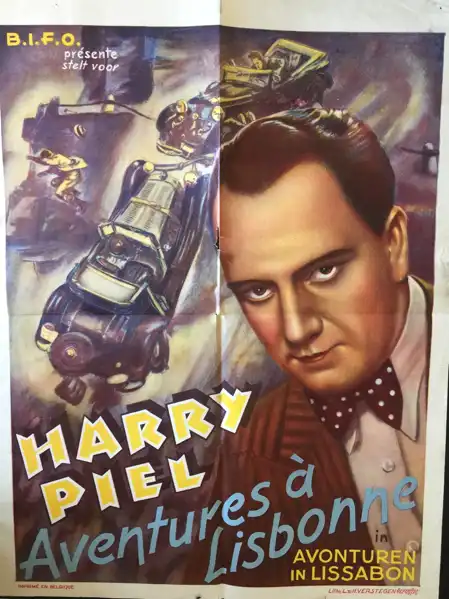
Director's Spotlight: Germany
A Deep Dive into the 1936 Vision of Harry Piel
Witnessing the stylistic transformation of Crime through Neunzig Minuten Aufenthalt reveals the global recognition that Harry Piel garnered after the release of Neunzig Minuten Aufenthalt. Serving as a mirror to the anxieties of a changing world, offering layers of thematic complexity that demand repeated viewing.
In Neunzig Minuten Aufenthalt, Harry Piel pushes the boundaries of conventional narrative. The film's unique approach to its subject matter has sparked endless debates and interpretations among cinephiles and critics alike.
While deeply rooted in Germany, Neunzig Minuten Aufenthalt has achieved a global reach, influencing directors from various backgrounds. Its ability to translate Crime tropes into a universal cinematic language is why it remains a cult staple decades after its 1936 release.
| Cinematography | High-Contrast |
| Soundtrack | Synth-Heavy |
| Editing | Rhythmic |
| Art Direction | Naturalist |
Visualizing the convergence of Harry Piel's style and the core Crime narrative.
On their way to a boxing competition in Buenos Aires, the criminal investigator Harry Winkler from Berlin and Conny Steven of Scotland Yard, meet in Lisbon. Both have a 90 minute break before their ship leaves for South America. They end up meeting Ilse Siebeck, a young woman and through her become part of a criminal mystery. Ilse's uncle is murdered and Harry Winkler is quickly able to determine that the man who murdered her uncle is the exact same man who murdered his father a few years earlier.
Decades after its release, Neunzig Minuten Aufenthalt remains a vital piece of the cinematic puzzle. Its influence can be seen in countless modern works, solidifying Harry Piel's status as a master of the craft in Germany and beyond.