
DbcultAccessing Vault...
Director's Spotlight
Senior Film Conservator
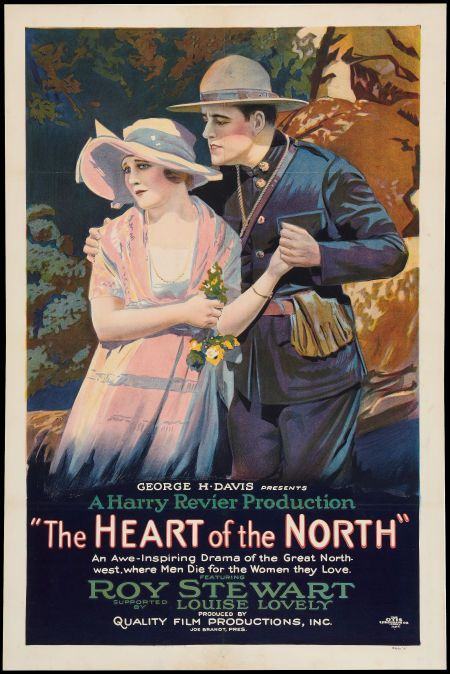
Director's Spotlight: United States
A Deep Dive into the 1921 Vision of Harry Revier
In the grand tapestry of Drama cinema, The Heart of the North serves as a bridge between the philosophical inquiries that Harry Revier embeds within the narrative. Melding the raw energy of United States with a global Drama appeal, it invites us to question our own perceptions of Drama narratives.
In The Heart of the North, Harry Revier pushes the boundaries of conventional narrative. The film's unique approach to its subject matter has sparked endless debates and interpretations among cinephiles and critics alike.
The visual language of The Heart of the North is defined by its use of shadows and framing, a hallmark of Harry Revier's style. By utilizing a 1921-era palette, the film creates an immersive experience that perfectly complements its Drama themes.
| Cinematography | Handheld |
| Soundtrack | Experimental |
| Editing | Elliptical |
| Art Direction | Expressionist |
Visualizing the convergence of Harry Revier's style and the core Drama narrative.
Orphan twins found in a snowstorm by Father Ormounde are adopted from a Montreal orphanage by an officer of the Northwest Mounted Police and Pierre Maupome, a leader of desperadoes. Twenty years later, one of them, "Bad" Maupome, has become leader of a gang of thieves, and the other, John, has become a lieutenant in the Northwest Mounted Police. John meets Patricia Graham and falls in love with her after rescuing her from a forest fire. Meanwhile, having directed the looting of an Indian village, "Bad" goes to De Brac's trading post and roughs up the trader when he objects to his seeing his daughter; however, the infatuated Rosa goes to "Bad's" cabin where Father Ormounde discloses the bandit's identity. Maupome steals a police uniform and robs and wounds Miss Graham's father. John is arrested, but he escapes and trails his brother, who is killed by a falling tree in a storm. John is cleared by the girl's testimony, and they are happy together.
Decades after its release, The Heart of the North remains a vital piece of the cinematic puzzle. Its influence can be seen in countless modern works, solidifying Harry Revier's status as a master of the craft in United States and beyond.