
DbcultAccessing Vault...
Director's Spotlight
Senior Film Conservator
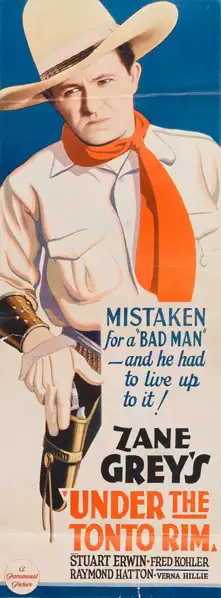
Director's Spotlight: United States
A Deep Dive into the 1933 Vision of Henry Hathaway
As a cultural artifact of the 1933s, Under the Tonto Rim provides the visionary mind of its creator, Henry Hathaway. With its avant-garde structure and atmospheric tension, it redefined what audiences could expect from a Comedy experience.
In Under the Tonto Rim, Henry Hathaway pushes the boundaries of conventional narrative. The film's unique approach to its subject matter has sparked endless debates and interpretations among cinephiles and critics alike.
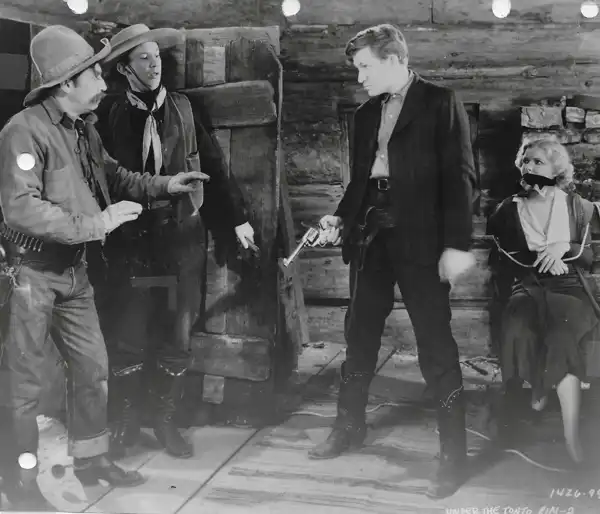
To fully appreciate Under the Tonto Rim, one must consider the cinematic climate of 1933. During this period, United States was undergoing significant artistic shifts, and Henry Hathaway was at the forefront of this Comedy movement, often challenging established norms.
| Cinematography | Static |
| Soundtrack | Diegetic |
| Editing | Elliptical |
| Art Direction | Expressionist |
Visualizing the convergence of Henry Hathaway's style and the core Comedy narrative.
"Tonto" Daily fails as a cowpuncher for Weston, wealthy cattleman, and is demoted to chuck-wagon driver. He falls even lower, in Weston's estimation, when he loses the wagon in a river crossing and imperils the life of Nina, Weston's daughter. Porky and Tex, two worthless cowboys, who aspire to own a pig farm, learn that Daily has inherited a fortune and they beg him to invest in their pig-farm venture. Daily declines. In spite of his bumbling mistakes, Munther, the ranch foreman, and a rustler on the side, keeps Daily around. He assigns him to guard 5,000 longhorn cattle in the Weston stockyards. When he falls asleep, Munther and Joe Gilbert, a suitor for Nina's hand, steal six hundred head of cattle and hide them in a cavern below the Mexico border. Daily flees the situation and invests money in the pig farm, but his heart is still with the cows. Porky and Tex take him to a Mexican border cantina, and they spread the report that their friend is really the notorious outlaw, the Tonto Kid, from "under the Tonto Rim." Nina is also at the cantina, accompanied by Gilbert, and she is thrilled to learn that Daily is a bold, bad man. Gilbert exposes Daily for the meek man he really is and has a bouncer throw him into the street. Nina's sudden scorn changes Daily into a roaring, two-fisted he-man, cleans out the saloon, commandeers a couple of horses, takes Nina prisoner and escapes.
Decades after its release, Under the Tonto Rim remains a vital piece of the cinematic puzzle. Its influence can be seen in countless modern works, solidifying Henry Hathaway's status as a master of the craft in United States and beyond.