
DbcultAccessing Vault...
Director's Spotlight
Senior Film Conservator
Director's Spotlight: United States
A Deep Dive into the 1921 Vision of Henry Kolker
In the grand tapestry of Drama cinema, Who Am I? serves as a bridge between the philosophical inquiries that Henry Kolker embeds within the narrative. Melding the raw energy of United States with a global Drama appeal, it invites us to question our own perceptions of Drama narratives.
In Who Am I?, Henry Kolker pushes the boundaries of conventional narrative. The film's unique approach to its subject matter has sparked endless debates and interpretations among cinephiles and critics alike.
While deeply rooted in United States, Who Am I? has achieved a global reach, influencing directors from various backgrounds. Its ability to translate Drama tropes into a universal cinematic language is why it remains a cult staple decades after its 1921 release.
| Cinematography | Noir-Inspired |
| Soundtrack | Orchestral |
| Editing | Slow-Burn |
| Art Direction | Brutalist |
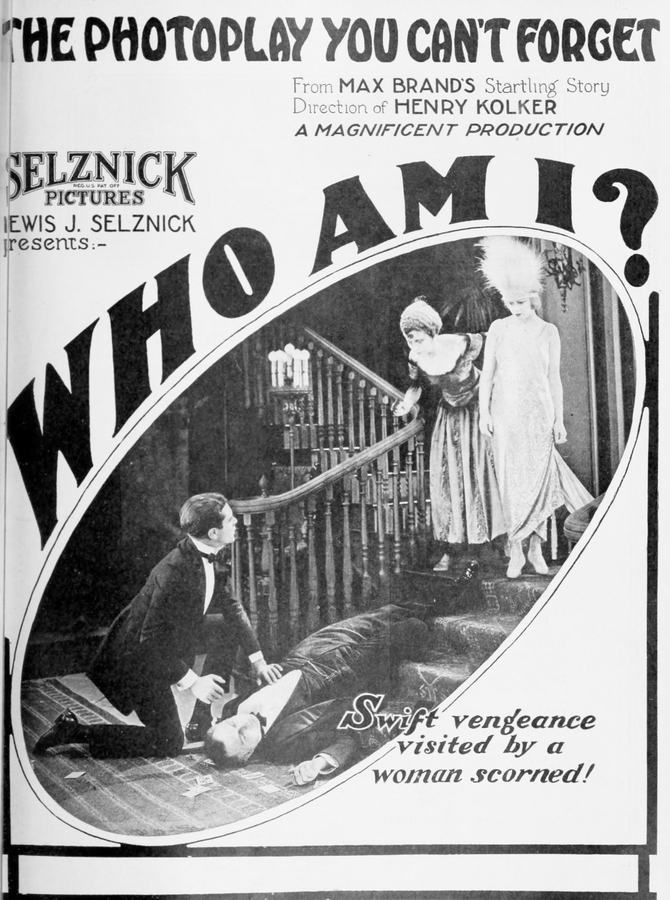
Visualizing the convergence of Henry Kolker's style and the core Drama narrative.
Ruth Burns is not aware that her father is a professional gambler until she receives a notification of his death and comes to New York. She inherits his gambling palace, and Jimmy Weaver, one of his associates, instructs her in its operation. Informed of her father's debt to John Collins, she gambles to pay off the debt until one of her victims tries to commit suicide and she realizes the wrong she is doing. In a final game she loses her winnings, and Collins not only is unmasked by Jimmy as a cheater but is killed by a woman he deserted. Ruth discovers the debt to have been pure invention and decides to marry Jimmy.
Decades after its release, Who Am I? remains a vital piece of the cinematic puzzle. Its influence can be seen in countless modern works, solidifying Henry Kolker's status as a master of the craft in United States and beyond.