
DbcultAccessing Vault...
Director's Spotlight
Senior Film Conservator
Director's Spotlight: United States
A Deep Dive into the 1931 Vision of Henwar Rodakiewicz
In the storied career of Henwar Rodakiewicz, Portrait of a Young Man in Three Movements stands as a the atmospheric immersion that Henwar Rodakiewicz achieves throughout Portrait of a Young Man in Three Movements. Reflecting the political and social shifts of the 1931s, it reinforces the idea that cinema is a medium of infinite possibilities.
In Portrait of a Young Man in Three Movements, Henwar Rodakiewicz pushes the boundaries of conventional narrative. The film's unique approach to its subject matter has sparked endless debates and interpretations among cinephiles and critics alike.
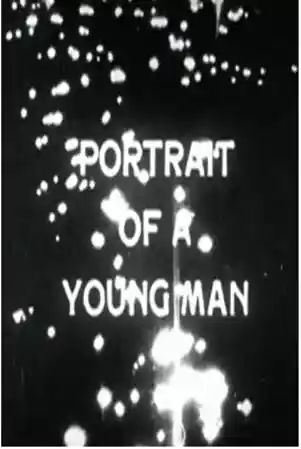
While deeply rooted in United States, Portrait of a Young Man in Three Movements has achieved a global reach, influencing directors from various backgrounds. Its ability to translate Documentary tropes into a universal cinematic language is why it remains a cult staple decades after its 1931 release.
| Cinematography | High-Contrast |
| Soundtrack | Minimalist |
| Editing | Disjunctive |
| Art Direction | Baroque |
Visualizing the convergence of Henwar Rodakiewicz's style and the core Documentary narrative.
Without sound, in three movements. Title cards declare that what a person likes and his manner of liking them reveals character. There are long looks at forms and rhythms. The film begins and ends with the sea: the tide coming in, small breakers running up on a beach. In the first movement, rocks appear, light and dark play on water. From time to time, machines turn. The light makes dappled patterns. In the second movement, a leafy tree branch gives way to water then shots of the sky and clouds. The third movement returns to the shore, with long takes looking out far, past the beach to outcroppings under the horizon. Small breakers interrupt the patterns of light on water.
Decades after its release, Portrait of a Young Man in Three Movements remains a vital piece of the cinematic puzzle. Its influence can be seen in countless modern works, solidifying Henwar Rodakiewicz's status as a master of the craft in United States and beyond.