
DbcultAccessing Vault...
Director's Spotlight
Senior Film Conservator
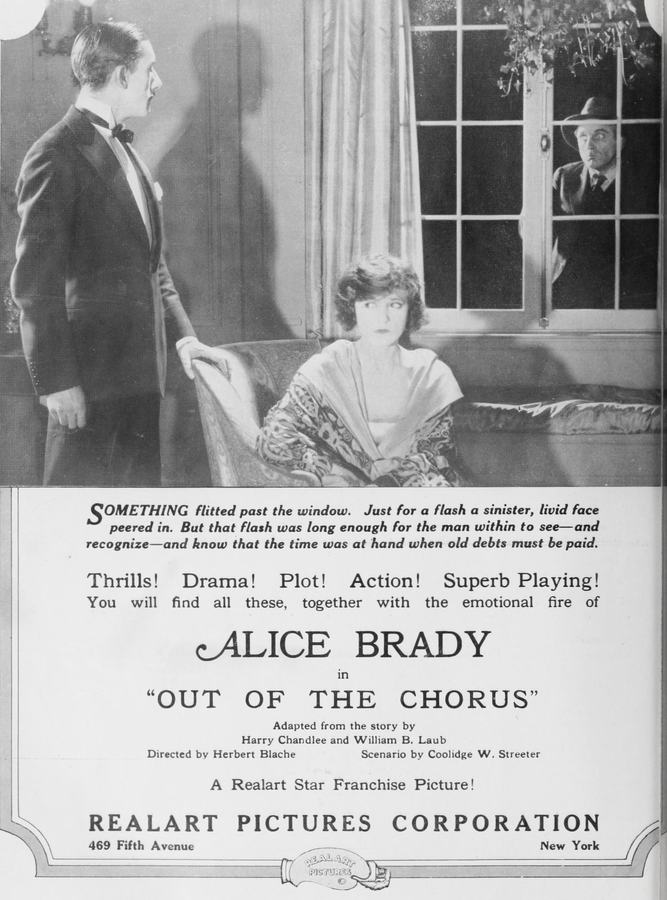
Director's Spotlight: United States
A Deep Dive into the 1921 Vision of Herbert Blaché
Deciphering the layers of Out of the Chorus (1921) reveals a monumental shift in Romance filmmaking spearheaded by Herbert Blaché. With its avant-garde structure and atmospheric tension, offering layers of thematic complexity that demand repeated viewing.
In Out of the Chorus, Herbert Blaché pushes the boundaries of conventional narrative. The film's unique approach to its subject matter has sparked endless debates and interpretations among cinephiles and critics alike.
To fully appreciate Out of the Chorus, one must consider the cinematic climate of 1921. During this period, United States was undergoing significant artistic shifts, and Herbert Blaché was at the forefront of this Romance movement, often challenging established norms.
| Cinematography | Deep Focus |
| Soundtrack | Minimalist |
| Editing | Slow-Burn |
| Art Direction | Brutalist |
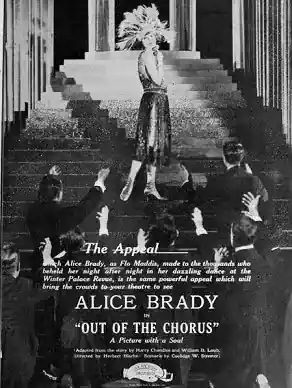
Visualizing the convergence of Herbert Blaché's style and the core Romance narrative.
After dancer Florence Maddis marries Ross Van Beekman, son of an aristocratic New York family, her friends predict that the union will not be successful, but she manages to fit into the family circle and has no desire to return to Broadway. Her mother-in-law disapproves of her, however, and persuaded by Ned Ormsby, one of Flo's admirers, she arranges for Flo to appear flirtatious. When Ross suspects Flo of harboring Ormsby, he fires a pistol at her closet; and since Ormsby is found shot in his house, Ross confesses, believing himself guilty, while Flo returns to the Winter Palace. Ross is freed, however, when Maddox, an enemy of Ormsby's, confesses to the crime, and Flo is happily reconciled with the family and Ross.
Decades after its release, Out of the Chorus remains a vital piece of the cinematic puzzle. Its influence can be seen in countless modern works, solidifying Herbert Blaché's status as a master of the craft in United States and beyond.