
DbcultAccessing Vault...
Director's Spotlight
Senior Film Conservator
Director's Spotlight: United Kingdom
A Deep Dive into the 1936 Vision of Herbert Brenon
The evocative power of Living Dangerously stems from the unique collaboration between the bold experimentation that has become synonymous with Herbert Brenon. Framed by the hauntingly beautiful landscapes of the production, it echoes the profound changes occurring in United Kingdom during that era.
In Living Dangerously, Herbert Brenon pushes the boundaries of conventional narrative. The film's unique approach to its subject matter has sparked endless debates and interpretations among cinephiles and critics alike.
In this work, Herbert Brenon explores the intersection of Crime and United Kingdom cultural identity. The meticulous attention to detail suggests a deep-seated commitment to pushing the boundaries of the medium, ensuring that Living Dangerously remains a relevant topic of study for Crime enthusiasts.
| Cinematography | Noir-Inspired |
| Soundtrack | Experimental |
| Editing | Invisible |
| Art Direction | Kitsch |
Visualizing the convergence of Herbert Brenon's style and the core Crime narrative.
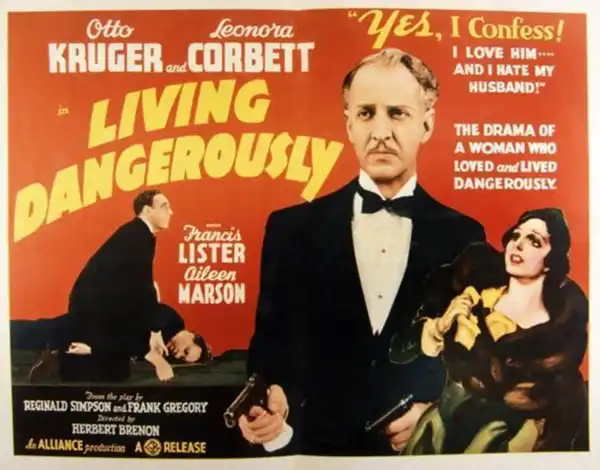
When Doctor Stanley Norton finds his partner, Doctor Henry Pryor, has been illegally selling drugs to addicts, he dissolves the partnership. Seeking revenge, Pryor accuses Norton of misconduct with Pryor's wife, Helen. The case is reviewed before the General Medical Council and Norton is struck off the register on the false testimony of Vera Kennedy, Pryor's mistress. The case discloses that Norton and Helen love each other and it also publicly reveals Pryor's traffic in drugs and he is sentenced to two years in prison. Helen and Norton migrate to the state of Montana and after dreary years of struggle, under another name, achieves success. He is a famous Park Avenue heart specialist when Pryor, embittered, broken and bent on revenge, gets into Norton's home by a ruse. His game is blackmail and his weapon the fact that Helen is still his lawful wife. Norton goes momentarily mad as he sees his life once more on the brink of ruin. He kills Pryor and then tells his story to his friend, the New York City district attorney, who finally declares that the shooting of Pryor was in self defense.
Decades after its release, Living Dangerously remains a vital piece of the cinematic puzzle. Its influence can be seen in countless modern works, solidifying Herbert Brenon's status as a master of the craft in United Kingdom and beyond.