
DbcultAccessing Vault...
Director's Spotlight
Senior Film Conservator
Director's Spotlight: United States
A Deep Dive into the 1930 Vision of Herbert Brenon
In the storied career of Herbert Brenon, The Case of Sergeant Grischa stands as a the atmospheric immersion that Herbert Brenon achieves throughout The Case of Sergeant Grischa. Reflecting the political and social shifts of the 1930s, it reinforces the idea that cinema is a medium of infinite possibilities.
In The Case of Sergeant Grischa, Herbert Brenon pushes the boundaries of conventional narrative. The film's unique approach to its subject matter has sparked endless debates and interpretations among cinephiles and critics alike.
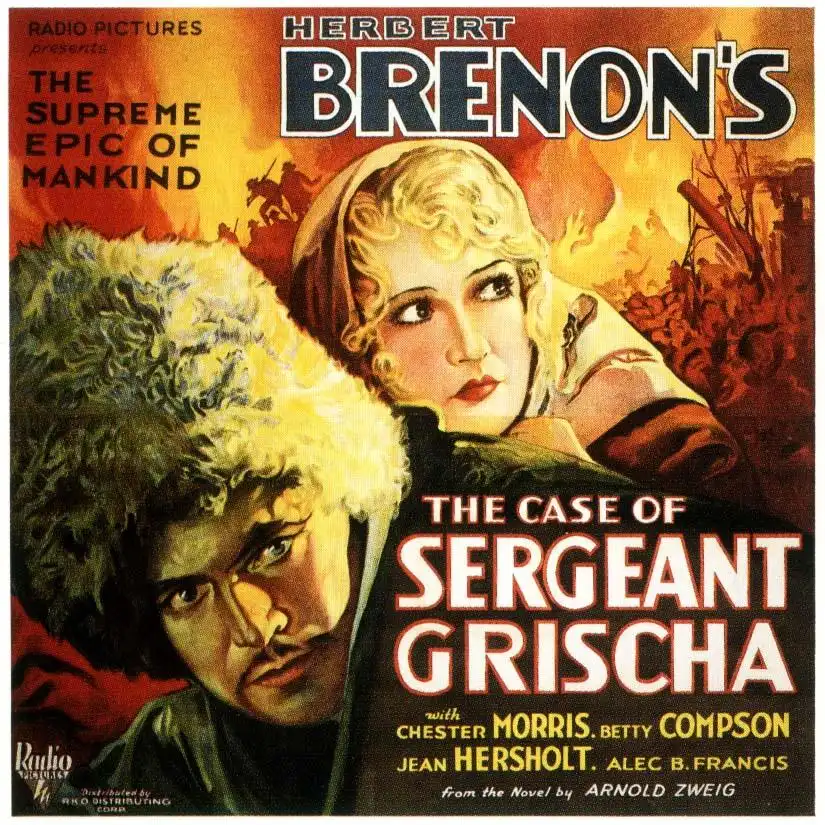
While deeply rooted in United States, The Case of Sergeant Grischa has achieved a global reach, influencing directors from various backgrounds. Its ability to translate War tropes into a universal cinematic language is why it remains a cult staple decades after its 1930 release.
| Cinematography | Handheld |
| Soundtrack | Experimental |
| Editing | Invisible |
| Art Direction | Kitsch |
Visualizing the convergence of Herbert Brenon's style and the core War narrative.
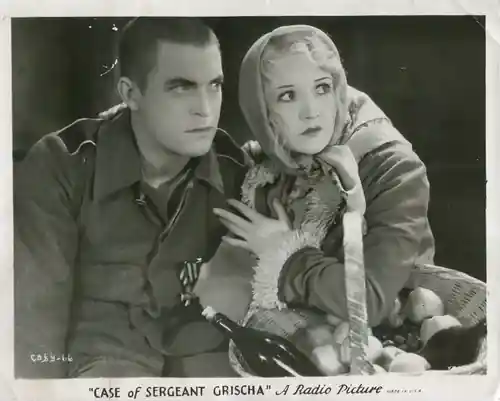
Sergeant Gischa Patrotkin (Chester Morris), a simple-minded Russian soldier, escapes from a German prisoner-of-war camp. He hides out for awhile with a peasant girl named Babka (Betty Compson), but finally his longing for his homeland overcomes him. Wearing the identity of a dead Russian spy he is soon recaptured by the Germans and sentenced to death. The German ruthlessness and disdain for justice is driven home when proof of his innocence of being the spy is brushed aside.
Decades after its release, The Case of Sergeant Grischa remains a vital piece of the cinematic puzzle. Its influence can be seen in countless modern works, solidifying Herbert Brenon's status as a master of the craft in United States and beyond.