
DbcultAccessing Vault...
Director's Spotlight
Senior Film Conservator
Director's Spotlight: United States
A Deep Dive into the 1914 Vision of Herbert Hall Winslow
To understand the modern evolution of United States film, one must first look at Manon Lescaut and the meticulous attention to detail that Herbert Hall Winslow applied to every frame. Reflecting the political and social shifts of the 1914s, it showcases the power of cult as a tool for social commentary.
In Manon Lescaut, Herbert Hall Winslow pushes the boundaries of conventional narrative. The film's unique approach to its subject matter has sparked endless debates and interpretations among cinephiles and critics alike.
In this work, Herbert Hall Winslow explores the intersection of cult and United States cultural identity. The meticulous attention to detail suggests a deep-seated commitment to pushing the boundaries of the medium, ensuring that Manon Lescaut remains a relevant topic of study for cult enthusiasts.
| Cinematography | Noir-Inspired |
| Soundtrack | Diegetic |
| Editing | Rhythmic |
| Art Direction | Naturalist |
Visualizing the convergence of Herbert Hall Winslow's style and the core cult narrative.
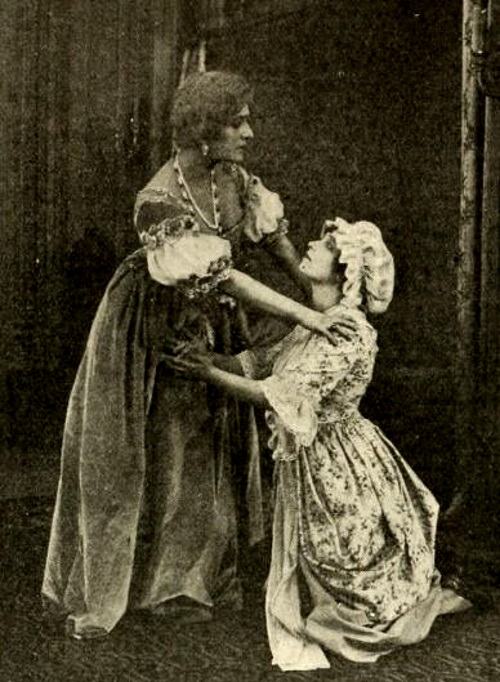
The story opens in the country home of Manon and her brother, who have been brought up by a religious father. The father insists that Manon shall enter a convent for life. He compels her to go. But on the way, stopping at an inn at Amisne, she meets the Chevalier Des Grieux. It is a case of love at first sight between them. Manon and Des Grieux escape the vigilance of her traveling companions and flee to Paris. The Baron De Bretigny, a rich nobleman, occupies a residence adjoining their home in Paris. He sees the lovely Manon and, attracted by her beauty, makes her acquaintance. Failing in his attempts to separate her from Des Grieux, the Baron finally writes to Des Grieux's father, an old friend of his in Picardy. The father, objecting to his son's choice, sends his elder brother and two servants to Paris, who takes Des Grieux away by force. The Baron then bribes Manon's maid, who tells her mistress that Des Grieux has deserted her, and, as he does not return, the heartbroken girl believes he has left her forever. Alone in Paris without friends or money she is finally compelled to accept the protection of the scheming Baron. Meantime the Chevalier, believing that Manon no longer cares for him, is persuaded by his faithful friend. Abbe Tiberge, to renounce the world and become an abbe. He goes to Paris and begins his studies at St. Sulpice. But Manon is still the unforgotten object of his affections. Through the false maid Manon discovers the trick by which the Baron separated her from her lover. She leaves the Baron's house and visits the Chevalier at St. Sulpice, where, after a pathetic and emotional scene she induces him to go with her. Manon's brother, Lescaut, a dissolute and unprincipled guardsman in the army of King Louis XV, is hired by the Baron to attack the Chevalier and bring Manon back to him. Ruffians engaged by Lescaut carry out this plan. But after a furious street combat the Chevalier escapes. Manon, however, is taken to the Baron's house and kept prisoner. Here the Chevalier follows her and alone and unaided rescues her after a struggle with the perfidious Baron. The lovers leave Paris and establish themselves in a suburban villa, where Lescaut comes and convinces them that he had no part in the plot. Their financial circumstances go from bad to worse. Des Grieux finds himself beset by creditors and is finally persuaded by his false friend, Lescaut, to gamble at a fashionable club in Paris. The Baron is present, induces the Chevalier to play with him and accuses him of cheating at cards. Manon interferes, but both are arrested and thrown into separate prisons. The Chevalier escapes from St. Lazare after wounding a guard and compelling the prison governor to open the doors for him. Meantime Lescaut has quarreled with the Baron and decides to help the Chevalier rescue Manon from the Magdalen. This is accomplished, and disguised in boy's clothes, Manon escapes in a coach with the Chevalier, driven by Lescaut. The prison guards start in pursuit. The coach is wrecked in an accident, Lescaut is killed and Manon recaptured. Taken back to prison she is sentenced to be transported to America, to the French province of Louisiana, as was the custom of that period. Chained to a number of unfortunate women prisoners Manon is taken to Havre. Des Grieux follows, seeking for some means of saving her, but finding none he smuggles himself as a stowaway on board the ship, which carries his beloved to far-away New Orleans. In the new world Manon and the Chevalier are kindly treated by the Louisiana Governor. But when the Governor's nephew becomes infatuated with Manon the Governor decides to separate them on his nephew's account. The Chevalier fights a duel with the nephew, then escapes with Manon to the forests, where she dies.
Decades after its release, Manon Lescaut remains a vital piece of the cinematic puzzle. Its influence can be seen in countless modern works, solidifying Herbert Hall Winslow's status as a master of the craft in United States and beyond.