
DbcultAccessing Vault...
Director's Spotlight
Senior Film Conservator
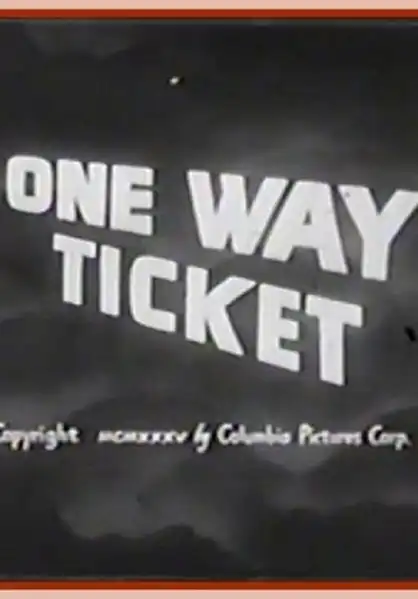
Director's Spotlight: United States
A Deep Dive into the 1935 Vision of Herbert J. Biberman
As we revisit the 1935 masterpiece One-Way Ticket, we are struck by the atmospheric immersion that Herbert J. Biberman achieves throughout One-Way Ticket. Exploring the nuances of the human condition with Drama flair, it solidifies Herbert J. Biberman's reputation as a master of the craft.
In One-Way Ticket, Herbert J. Biberman pushes the boundaries of conventional narrative. The film's unique approach to its subject matter has sparked endless debates and interpretations among cinephiles and critics alike.
To fully appreciate One-Way Ticket, one must consider the cinematic climate of 1935. During this period, United States was undergoing significant artistic shifts, and Herbert J. Biberman was at the forefront of this Drama movement, often challenging established norms.
| Cinematography | Handheld |
| Soundtrack | Minimalist |
| Editing | Slow-Burn |
| Art Direction | Brutalist |
Visualizing the convergence of Herbert J. Biberman's style and the core Drama narrative.
Jerry, the son of a bank depositor who was cheated out of his savings, is sent to prison after he robs the bank of the exact sum his father lost. Captain Bill Bourne lives on the grounds of the prison along with his wife, their daughter Bonnie and an adopted daughter, Ellen. When the Bourne's gardener is paroled, Bonnie arranges for Jerry to take over the work. Bonnie then asks Jerry to sing at an upcoming dance. During the dance, some of the inmates escape, and all die in the ensuing shootout. Desperate to leave home, Bonnie persuades Bill to allow her to attend college. On the day she leaves, Jerry escapes in the trunk of her car. Bonnie discovers him, but does not turn him in. Jerry is hired by the university as a gardener and he and Bonnie fall in love. When Bill visits Bonnie, hoping to learn why his letters have been returned unopened, Bonnie's roommate informs him that the couple has married. After hiding out in the mountains, Bonnie and Jerry move to the city, where she works as a waitress, saving her earnings so they may flee to the South Seas. One day, Jerry risks his life in an experimental parachute jump, in order to earn the high pay. Afterward, as Jerry nears his home with Bonnie at his side, he sees policemen approaching their apartment. Jerry pulls a gun, but Bonnie manages to take it from him and wounds him in the shoulder in order to prevent a gunfight. Bill arrests Jerry, and although both he and Bonnie will serve time, each promises to wait for the other.
Decades after its release, One-Way Ticket remains a vital piece of the cinematic puzzle. Its influence can be seen in countless modern works, solidifying Herbert J. Biberman's status as a master of the craft in United States and beyond.