
DbcultAccessing Vault...
Director's Spotlight
Senior Film Conservator
Director's Spotlight: United States
A Deep Dive into the 1932 Vision of Herman C. Raymaker
The thematic gravity of Trailing the Killer (1932) is rooted in the historical context that Herman C. Raymaker weaves into the Adventure fabric. Synthesizing the best elements of United States and international cinema, it highlights the importance of independent voices in United States.
In Trailing the Killer, Herman C. Raymaker pushes the boundaries of conventional narrative. The film's unique approach to its subject matter has sparked endless debates and interpretations among cinephiles and critics alike.
| Cinematography | Handheld |
| Soundtrack | Experimental |
| Editing | Invisible |
| Art Direction | Kitsch |
Visualizing the convergence of Herman C. Raymaker's style and the core Adventure narrative.
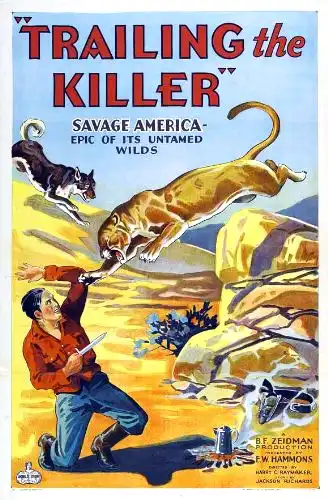
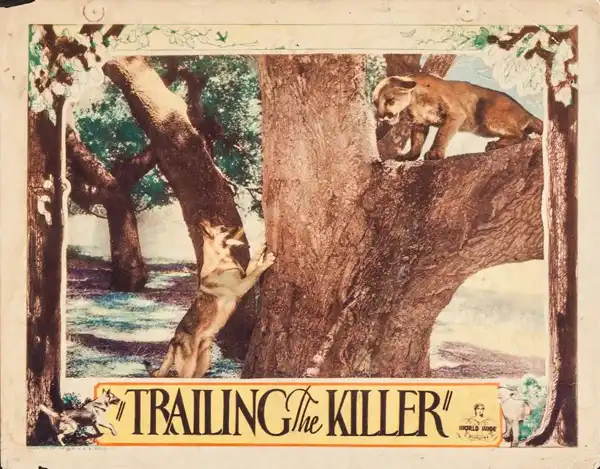
While the original title, "Trailing the Killer" isn't a misnomer, it was a bit misleading since the "trailer" is a dog named Caesar (Caesar the Dog) and the killer is a mountain lion, aka a cougar or puma, as the narrator quickly clarifies. But the makers also pointed out that Caesar "is the most intelligent dog actor since Rin-Tin-Tin" which probably lured a few Rin-Tin-Tin fans with a show-me attitude. Caesar prowls around the Northwest woods, dispatches a rattlesnake, visits his she-wolf mate and their pups, pauses to watch a raccoon personally washing every morsel of food before eating it--and that raccoon had enough food to use up several minutes of running time--then saves sheepherder Pierre (Francis McDonald) from getting eaten up by one mean mountain lion. Rin-Tin-Tin he ain't, but then who was? Commonwealth changed the title to "Call of the Wilderness" when they acquired it for 16mm rental to the school market.
Decades after its release, Trailing the Killer remains a vital piece of the cinematic puzzle. Its influence can be seen in countless modern works, solidifying Herman C. Raymaker's status as a master of the craft in United States and beyond.