
DbcultAccessing Vault...
Director's Spotlight
Senior Film Conservator
Director's Spotlight: United States
A Deep Dive into the 1914 Vision of Hobart Bosworth
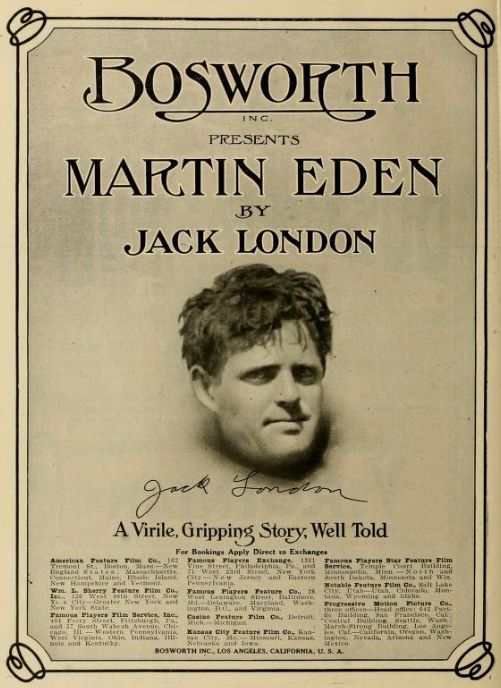
To understand the modern evolution of United States film, one must first look at Martin Eden and the meticulous attention to detail that Hobart Bosworth applied to every frame. Reflecting the political and social shifts of the 1914s, it showcases the power of cult as a tool for social commentary.
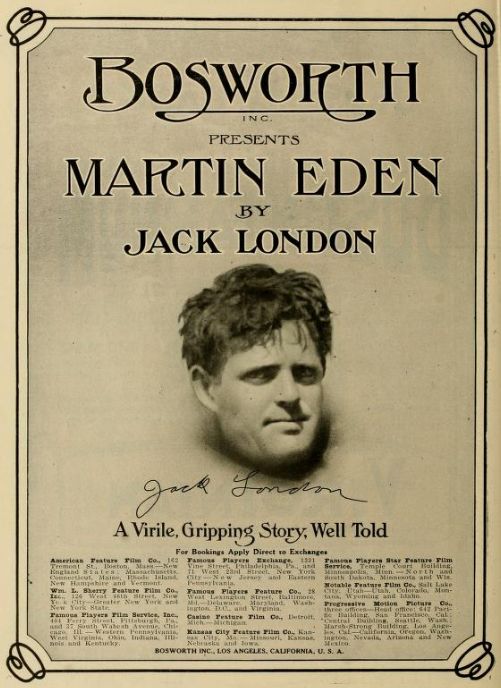
In Martin Eden, Hobart Bosworth pushes the boundaries of conventional narrative. The film's unique approach to its subject matter has sparked endless debates and interpretations among cinephiles and critics alike.
| Cinematography | Handheld |
| Soundtrack | Diegetic |
| Editing | Rhythmic |
| Art Direction | Naturalist |
Visualizing the convergence of Hobart Bosworth's style and the core cult narrative.
From a hard-won leadership of a hoodlum gang in Oakland, Cal., from a beach-comber's life in the South Seas, and from the inferno of the stokehole, Martin Eden, an unlearned sailor, wins his way to fame and fortune. But it is not until great odds have been conquered and much has been sacrificed that the goal is reached. And then it is too late. The odds are ridicule, poverty and lack of education. The great sacrifice, love. A chance meeting, in his hoodlum days, with Arthur Morse, a college man, proves the turning point of his life, for through him he meets Arthur's sister Ruth. This means the opening of a new world, and in the remaining reels of the play we see Martin's indomitable spirit and the development of his career. He makes two picturesque friends. One is Russ Brissenden, a poet, who encourages Martin when he sorely needs it, though his taking the latter to the Socialists' meeting had unfortunate results for the cub reporter as well as for Martin. The other is Maria, his warm-hearted Portuguese landlady, whose wildest flight of imagination, ""hoe all da roun' for da kids," Martin later is happily able to gratify. A third figure comes now and then into Martin's life: beautiful, wistful Lizzie Connelly, who loves him and whom he pities but cannot love. As in so many lives, matters are at their lowest ebb before the tide turns. Martin is penniless and without food or warmth. He has had only one sale of a manuscript in the many months of unceasing endeavor. Brissenden is dead. Ruth, losing her faith, has broken their engagement and refuses to see him. Then comes the sudden sweep of success, with publishers clamoring for his work and fame and wealth in his hand. But the tension that sustained him during his days of poverty and struggle breaks. Even Love, in the person of the repentant Ruth, knocks at his door in vain, and he sails for the South Seas, to find again, if he may, his old-time zest for life.
Decades after its release, Martin Eden remains a vital piece of the cinematic puzzle. Its influence can be seen in countless modern works, solidifying Hobart Bosworth's status as a master of the craft in United States and beyond.