
DbcultAccessing Vault...
Director's Spotlight
Senior Film Conservator
Director's Spotlight: United States
A Deep Dive into the 1914 Vision of Hobart Bosworth
Peeling back the layers of Hobart Bosworth's The Country Mouse exposes the technical innovation that Hobart Bosworth introduced to the cult format. Driven by an uncompromising commitment to cult excellence, it stands as the definitive 1914 statement on cult identity.
In The Country Mouse, Hobart Bosworth pushes the boundaries of conventional narrative. The film's unique approach to its subject matter has sparked endless debates and interpretations among cinephiles and critics alike.
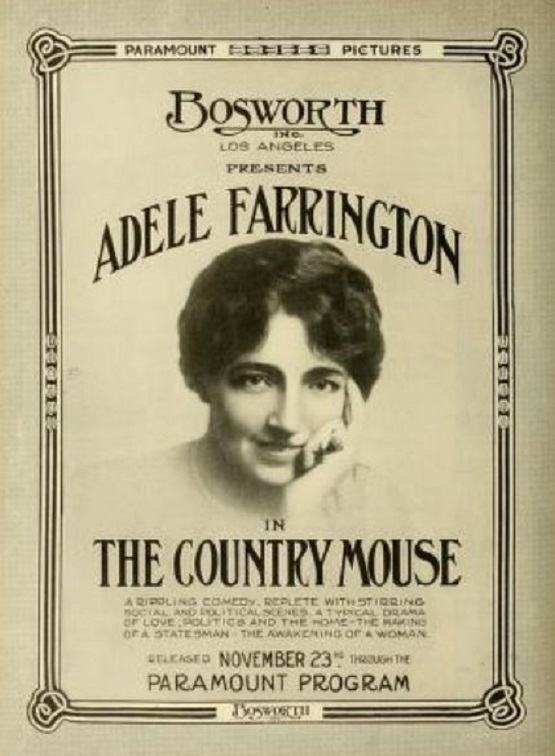
In this work, Hobart Bosworth explores the intersection of cult and United States cultural identity. The meticulous attention to detail suggests a deep-seated commitment to pushing the boundaries of the medium, ensuring that The Country Mouse remains a relevant topic of study for cult enthusiasts.
| Cinematography | Handheld |
| Soundtrack | Diegetic |
| Editing | Elliptical |
| Art Direction | Expressionist |
Visualizing the convergence of Hobart Bosworth's style and the core cult narrative.
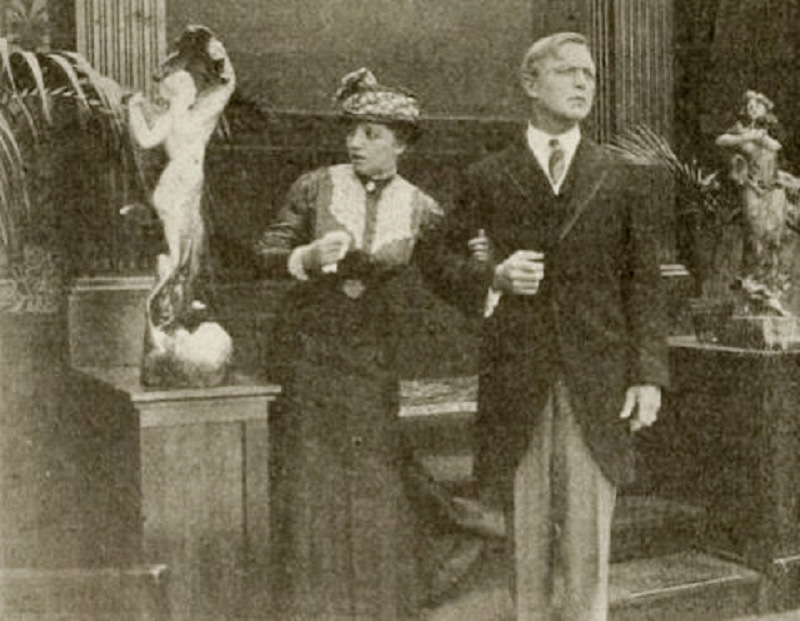
When Billy Balderson and his two cronies, Charlie and Ed, get together on Bill's porch to discuss the high-handed ways in which the railroad is putting it over on the farmers, cross-roads politics develop a latent spring of eloquence, and poor, dowdy little Addie, Billy's wife, thinks that her husband is the most wonderful orator she ever heard. A few days later they dress-up in their second best and go to a meeting on the Common, where George Marshall, suave, well-dressed and condescending, explains to the voters that the railroad is their only hope of salvation and that in the approaching election they should vote for representatives who will support that institution. Billy questions Marshall. The crowd is with Billy, and almost before he knows it he is on the platform, annihilating Marshall's argument in a rousing speech. Between excitement and pride Addie is reduced almost to hysterics, and when Charlie, seizing the psychological moment, nominates Billy for the Legislature, she is nearly overcome. The most exciting days of her hard-working, colorless life follow, culminating in the fete day when Billy entertains all the townsmen at their farm to celebrate his election. With their arrival at the State Capitol a new era begins, and Addie soon learns that the years of drudgery and plain living on the farm are poor preparation for coping with the political circle of the State Capitol. Shy and bewildered, and lacking the poise that a sense of his position gives Billy, she quickly finds herself outstripped by him in adapting themselves to the changed conditions of their lives. Addie can only look nervously about and wish she was at home; as she and Billy attend their first reception and she notices the covert laughter of the people about them. Two persons notice them particularly, George Marshall, the speaker Billy answered during the campaign, and his wife, Myrtle. As Billy is recognized as a coming man, and his vote will be needed on an impending railroad bill, Marshall quietly gives his instructions to Myrtle, then recalls himself to Billy, and tries to put him and the embarrassed Addie at their ease. Taken up by the Marshalls, Billy makes rapid progress in the social life of the capitol, but only until Addie learns that Mrs. Marshall is monopolizing her Billy's time, and that she herself is looked upon by the women of the political circle as a poor little frump with no spirit. With a blank signed check from Billy, she calls in the services of Mme. Pauline, proprietor of a beauty parlor, and the result is so astoundingly transforming that she can hardly believe her eyes. She passes Billy on the street and he does not know her, though the thought flashes through his mind that his little country mouse of a wife might have looked like that. When he reaches home, there is Addle, still the little, dowdy country mouse, who seems to shrink from the very thought of the reception and ball to which they are invited, and who later sees him off to it with an air of relief. The relief at least is not feigned, for it has been hard work to keep Mme. Pauline and her maid quiet in the kitchen, while she gets Billy out of the way. The transformation takes place quickly, and the country mouse appears at the ball as a wonderfully charming and brilliant woman. Marshall is distinctly impressed, and so ardently seized the opportunity of persuading Addie to influence Billy's vote on the railroad bill, that Billy is furiously jealous. The denouement is cleverly turned to a comedy finish and the play closes happily as Addie begins to teach her husband the tango.
Decades after its release, The Country Mouse remains a vital piece of the cinematic puzzle. Its influence can be seen in countless modern works, solidifying Hobart Bosworth's status as a master of the craft in United States and beyond.