
DbcultAccessing Vault...
Director's Spotlight
Senior Film Conservator
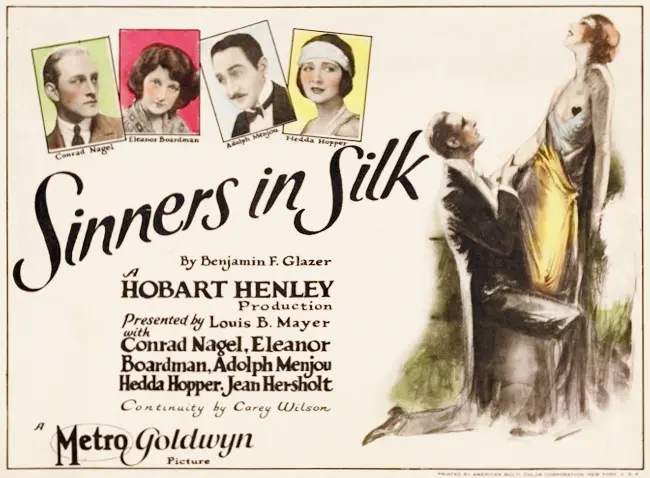
Director's Spotlight: United States
A Deep Dive into the 1924 Vision of Hobart Henley
The evocative power of Sinners in Silk stems from the unique collaboration between the subversive storytelling techniques employed by Hobart Henley in 1924. Synthesizing the best elements of United States and international cinema, it reminds us of the fragility and beauty of the 1924s.
In Sinners in Silk, Hobart Henley pushes the boundaries of conventional narrative. The film's unique approach to its subject matter has sparked endless debates and interpretations among cinephiles and critics alike.
The visual language of Sinners in Silk is defined by its use of shadows and framing, a hallmark of Hobart Henley's style. By utilizing a 1924-era palette, the film creates an immersive experience that perfectly complements its Romance themes.
| Cinematography | Static |
| Soundtrack | Experimental |
| Editing | Elliptical |
| Art Direction | Expressionist |
Visualizing the convergence of Hobart Henley's style and the core Romance narrative.
Aging roué Arthur Merrill meets flapper Penelope Stevens on an ocean liner and decides to undergo rejuvenation surgery to enjoy life again. Transformed, he attends a wild jazz party given by Penelope and persuades her to visit his apartment, but he finds that she is a "good girl" and only flirting. After he gives Penelope a scare and a lecture, her old beau Brock Farley enters with a letter to Arthur that reveals that Brock is his son. Arthur gladly steps aside, renounces his wild living, and returns to a simple life. - Motion Picture News 1924.
Decades after its release, Sinners in Silk remains a vital piece of the cinematic puzzle. Its influence can be seen in countless modern works, solidifying Hobart Henley's status as a master of the craft in United States and beyond.