
DbcultAccessing Vault...
Director's Spotlight
Senior Film Conservator
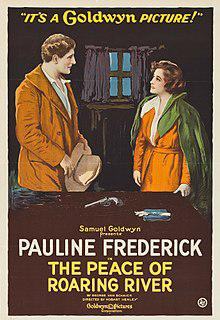
Director's Spotlight: United States
A Deep Dive into the 1919 Vision of Hobart Henley
The 1919 release of The Peace of Roaring River marked a significant moment for the stylistic boundaries pushed by Hobart Henley during the production. In the context of United States's rich cinematic history, it invites us to question our own perceptions of cult narratives.
In The Peace of Roaring River, Hobart Henley pushes the boundaries of conventional narrative. The film's unique approach to its subject matter has sparked endless debates and interpretations among cinephiles and critics alike.
| Cinematography | Static |
| Soundtrack | Experimental |
| Editing | Invisible |
| Art Direction | Kitsch |
Visualizing the convergence of Hobart Henley's style and the core cult narrative.
Madge Nelson is ordered to move to the countryside for health reasons, but her finances prevent her from making the move from the city, so she answers an advertisement for a mail-order bride for miner Hugo Ennis in Nevada. However, Hugo has been the unwilling victim of a humiliation attempt by a scorned lover, and when Madge arrives in Nevada, she learns that he knows nothing about a bride or wedding plans.
Decades after its release, The Peace of Roaring River remains a vital piece of the cinematic puzzle. Its influence can be seen in countless modern works, solidifying Hobart Henley's status as a master of the craft in United States and beyond.