
DbcultAccessing Vault...
Director's Spotlight
Senior Film Conservator
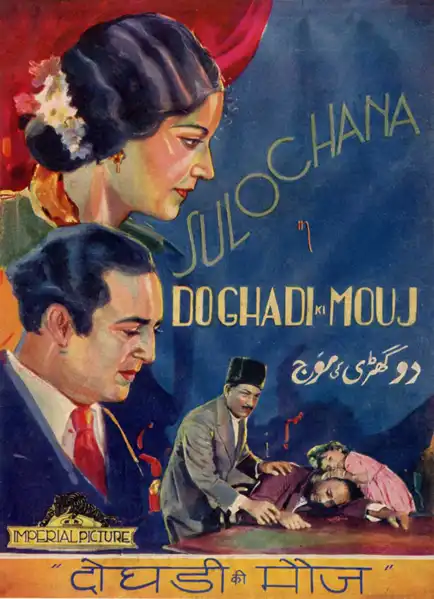
Director's Spotlight: India
A Deep Dive into the 1935 Vision of Homi Master
The 1935 release of Do Ghadi Ki Mouj marked a significant moment for the stylistic boundaries pushed by Homi Master during the production. In the context of India's rich cinematic history, it invites us to question our own perceptions of cult narratives.
In Do Ghadi Ki Mouj, Homi Master pushes the boundaries of conventional narrative. The film's unique approach to its subject matter has sparked endless debates and interpretations among cinephiles and critics alike.
The visual language of Do Ghadi Ki Mouj is defined by its use of shadows and framing, a hallmark of Homi Master's style. By utilizing a 1935-era palette, the film creates an immersive experience that perfectly complements its cult themes.
| Cinematography | Deep Focus |
| Soundtrack | Orchestral |
| Editing | Slow-Burn |
| Art Direction | Brutalist |
Visualizing the convergence of Homi Master's style and the core cult narrative.
Hero Kishenprasad is an upright engineer with a large family, including his wife Lakshmi, mother Valibai, sister Asha and son Bachoo. He gambles away his happiness and is about to be jailed for embezzlement when he is saved by an honest fellow employee, Hamid, who takes the blame. The villains are his secretary Kassum and Sukhlal, a rich man who wants to marry Asha. When his advances are spurned, he alleges that he had an affair with Kisheprasad's wife, Lakshmi.
Decades after its release, Do Ghadi Ki Mouj remains a vital piece of the cinematic puzzle. Its influence can be seen in countless modern works, solidifying Homi Master's status as a master of the craft in India and beyond.